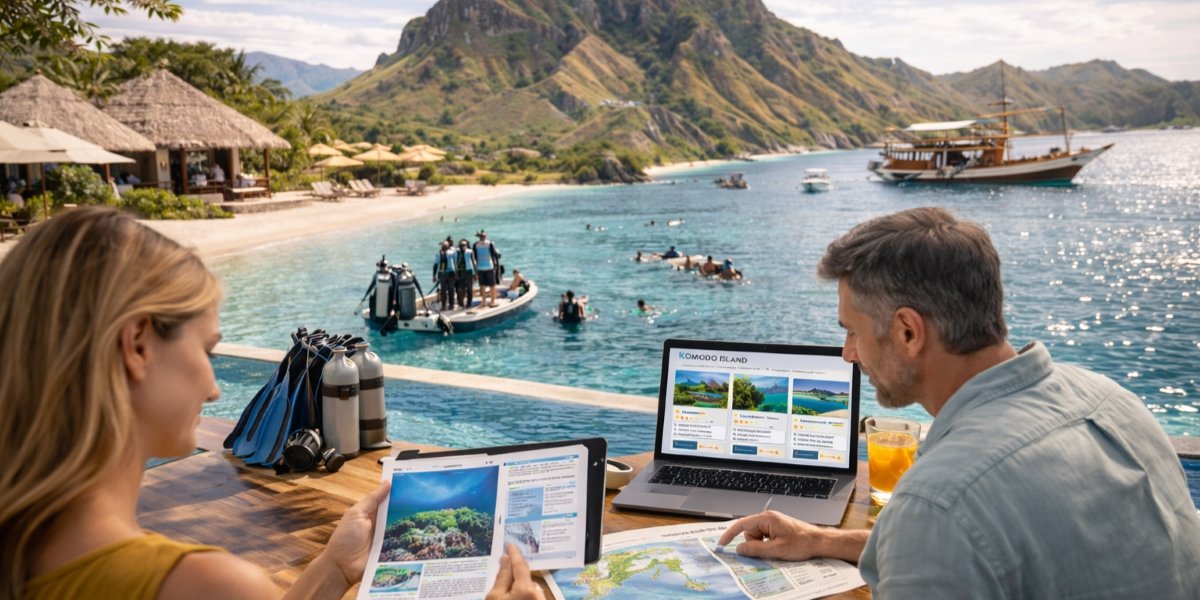
If you run a small hotel in New York, you’ve likely had that familiar front-desk moment: a guest checking out mentions they’re headed somewhere “wild”, next Komodo, Flores, a liveaboard, maybe a few days of diving. They’re excited, but the plan is often fuzzy. This is precisely when a simple, practical Komodo Island hotel travel update becomes valuable not as a sales pitch, but as a way to help travellers avoid preventable stress and help your hotel look like a trusted host even after the stay ends.
Komodo is not a single resort strip where you pick a property and stay put. It’s a region anchored by Komodo National Park, and the trip experience is shaped by logistics: where you base yourself, how you move by boat, and how flexible your schedule is when weather or sea conditions change. For travel readers, that means the most critical decision is not “which room.” It’s “what kind of trip am I actually building?”
Why Komodo Trips Go Wrong for Otherwise Savvy Travelers
From an operator’s perspective, Komodo has a predictable failure pattern: people plan it like a city break. They assume they can land, drop luggage, and improvise. But Komodo is closer to an expedition-lite destination. Boats depart on schedules. Sea conditions can alter routes. Particular highlights are easiest at specific times of day. And the gateway town matters more than travellers expect.
The guests who have the best Komodo experiences tend to do two things well. First, they choose a base that matches their priorities, comfort, and flexibility, rather than “remote” vibes. Second, they build in at least one buffer day so the trip doesn’t collapse if a boat plan shifts.
As hoteliers, we recognise this immediately: it’s the same difference between a guest who books a tight connection and one who gives themselves breathing room.
The Komodo “Base” Decision in Plain English
When travellers talk about Komodo Island hotels, they often refer to the broader area, not strictly to the islands within the park. In practice, most stays are planned around the gateway area on Flores, with day trips or multi-day boat itineraries into the park.
The key planning question is: does the guest want a base that maximises flexibility, or a base that maximises immersion?
A flexibility-first base is usually better for first-timers. It allows travellers to adjust plans if they arrive late, if the seas are rough, or if they decide to add a day of diving. It also makes it easier to handle the practical needs that quietly improve trips: cash access, last-minute supplies, alternative dining, and recovery time after the water.
An immersion-first base works well for travellers who already know what they want and are comfortable with structured days. These guests typically accept that the property’s rhythm and transfer schedules will shape the trip. When expectations are aligned, it can feel like stepping into a curated experience. When expectations are not aligned, it can feel restrictive.
From a small-hotel owner’s perspective, this is a familiar concept: the “right guest” is the one whose expectations match the product.
What’s “New” in Komodo Travel Planning Right Now
Even without getting overly technical, there are two current realities worth sharing with travellers: the destination is increasingly managed with conservation in mind, and marine conditions remain a practical variable that can change plans.
Komodo is not a theme park. It is a protected environment with wildlife rules and responsible visitor expectations. Travellers should assume that guidance may be structured and that certain areas may operate with stricter controls than they’ve experienced elsewhere. This isn’t a downside; it’s part of what protects the destination and keeps the experience meaningful rather than overcrowded.
The second reality is weather and sea state. Komodo’s waters can be stunning, but not always gentle. Conditions influence boating comfort and sometimes the day’s route. The best trips treat flexibility as part of the design, not as a last-minute compromise.
If you’re advising guests at your hotel in New York, the most useful line you can give them is simple: “Plan one day with breathing room, and you’ll enjoy the trip more.”
Diving: What Guests Actually Need to Know Before They Book Tours
Diving is often the headline reason travellers go to Komodo. That’s why Komodo diving tours are such a high-interest search term and also why expectations can get unrealistic. Guests see spectacular images and assume every day looks like that. In reality, Komodo can be exceptional, but it rewards travellers with the right mindset.
The first point is that currents can be intense. That doesn’t mean “dangerous” when managed correctly; it implies that dive planning, briefings, and guide discipline matter. Travellers should select comfortable operators and say “not today” when conditions aren’t suitable for a particular site. The best diving operators are not the ones who promise everything; they are the ones who manage risk calmly and adapt the plan without drama.
The second point is that mixed groups should plan intentionally. Many couples and friend groups include both divers and non-divers. The best itineraries for mixed groups include snorkel-friendly sites, scenic stops, and enough downtime that non-divers don’t feel like they’re waiting around. From an experience-design point of view, it’s precisely like designing a hotel package that works for both business travellers and leisure travellers; you build value for both, not just one.
The third point is about pacing. New York travellers are often high-energy and schedule-driven. Komodo doesn’t always reward that. Multi-day water activity can be physically demanding. A well-paced plan includes rest, hydration, and realistic expectations around early starts and travel time.
Pink Beach and “Bucket-List Stops”: How to Prevent Disappointment
Many travellers arrive with a checklist: Komodo dragons, a viewpoint hike, a beach stop, a snorkel session, a perfect photo. There’s nothing wrong with that, but checklist travel becomes fragile when it leaves no room for change.
A healthy way to frame bucket-list stops is to treat them as “targets,” not “assurances.” Timing, crowds, and conditions can shape how those moments feel. The travellers who have the best stories are usually the ones who let the day be the day, who accept that the ocean has a vote and that the trip can still be great if the schedule shifts.
As hoteliers, we know this psychology: a guest who expects perfection is harder to satisfy than a guest who expects a well-handled experience.
The Business Lens: Why Komodo Is a Case Study in Experience-Led Hospitality
Komodo is a destination where the product is not only the room or the boat; it’s the orchestration. That makes it particularly interesting for small hotel owners reading Voyage New York. Komodo travel highlights three lessons that translate directly into operations back home.
First, clear expectation-setting is a competitive advantage. Whether it’s check-in times or boat departure windows, clarity reduces friction and protects reviews.
Second, operational flexibility is not “nice to have”; it is part of the service. In a small hotel, flexibility shows up in early luggage storage, late arrivals, room moves handled smoothly, and staff who can solve problems without escalating. In Komodo travel, flexibility shows up in route adjustments, safe alternatives, and calm communication.
Third, the guest remembers how the experience was handled, not just what happened. Delays and changes are inevitable in travel. The differentiator is the way they are professionally managed.
A Simple Komodo Travel Checklist You Can Share With Guests
If you want a quick, non-commercial “front desk script” you can hand to guests, this is the practical version.
Encourage travellers to choose a base that matches their style (flexibility-first versus immersion-first). Suggest at least one buffer day so they don’t pin the entire trip on a single boat excursion. Advise them to select diving operators who emphasise safety and adaptation rather than aggressive promises. Remind them to plan for early starts, sun exposure, and the physical reality of water days. And finally, encourage them to treat wildlife and conservation rules seriously because that respect is what keeps destinations like Komodo special.
Bottom Line
Komodo is an extraordinary destination, and the best trips are the ones designed like a good hospitality operation: explicit promises, flexible execution, and enough slack in the system to absorb surprises without stress. For travellers, that means choosing the right base among Komodo Island hotels, pacing the schedule, and approaching Komodo diving tours with a safety-first mindset. For small hotel owners, it’s a reminder that great experiences are built on quiet competence and that competence is what guests remember long after they check out.