Photography is now an everyday practice in contemporary medicine. In areas where treatment effectiveness is apparent, such as dermatology, plastic surgery, orthodontics, and hair restoration, standardized photographs often play a key role in clinical documentation. Both before-and-after treatment pictures help doctors track recovery and discuss possible treatment outcomes during patient consultations. The professional community also advocates standardized photos because lighting, camera angle, position, and patients’ posture can affect how the outcome is interpreted.
Hair restoration relies heavily on photographic documentation because treatment results develop gradually. Many patients take a few months to start seeing results, not right away. Clinical photos enable doctors to evaluate hair thickness, hairline design, donor sites, and overall hair coverage at various stages of recovery. These photos also serve as a baseline for the doctor to assess before treatment begins, rather than relying on notes on paper. That practical value has made photography a routine part of patient evaluation throughout the specialty.
Medical literature has also recognized another role for clinical photography in documenting changes during follow-up visits. Photographs may also be incorporated into informed consent discussions to help patients understand realistic expectations based on similar cases. While photographs do not predict individual outcomes, they often contribute to discussions between physicians and patients regarding surgical planning and long-term management. Many practices, therefore, maintain organized image archives as part of their clinical records.
Beyond patient care, clinical photographs have acquired greater legal and commercial importance. Healthcare providers increasingly publish educational materials on websites, digital platforms, and social media. Original photographs and videos created by a medical practice may qualify for copyright protection under United States law, while patient consent governs the use of identifiable medical images. These legal issues are distinct but closely related. Copyright addresses ownership of creative works, whereas privacy laws and consent agreements regulate the use of patient information. Together, they form an important part of modern healthcare documentation.
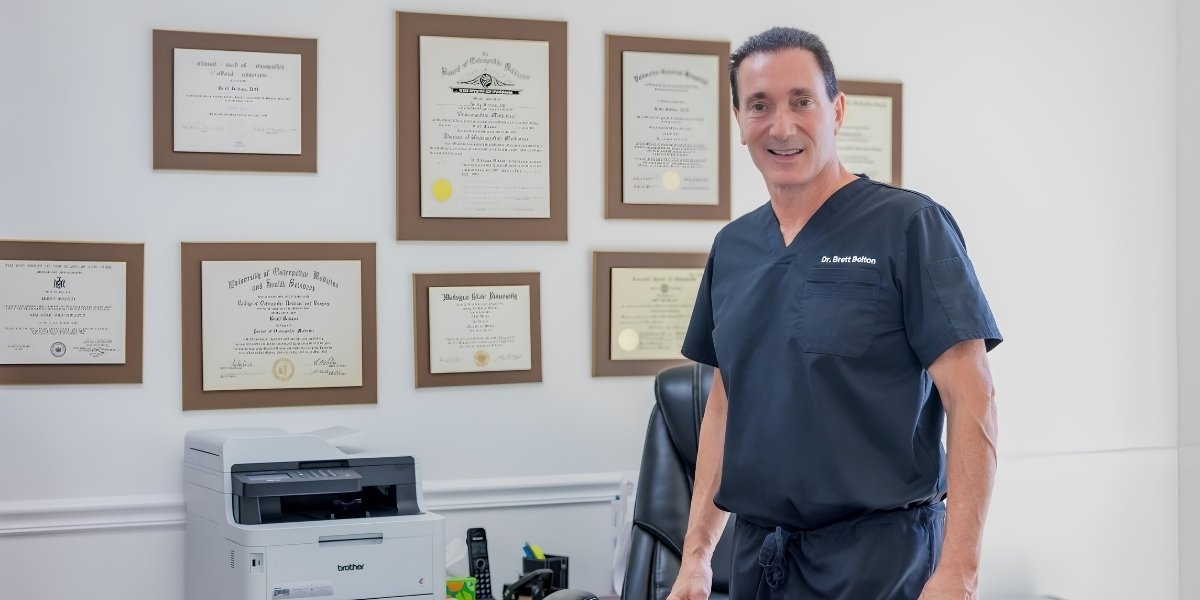
In hair restoration, Dr. Brett Bolton has said his practice has developed an extensive archive of before-and-after photographs collected over decades of clinical work. According to information published by Bolton Management LLC, operating under the trade name Great Hair Transplants, these records have accumulated since Bolton began practicing exclusively in hair restoration surgery in 1997. The practice presents the archive primarily as documentation of surgical cases and long-term patient outcomes. Independent sources confirm that photographic documentation has played a visible role in the practice’s educational materials.
Questions surrounding ownership of clinical imagery became more visible through a federal copyright dispute involving Bolton and Bosley, Inc. Public court records show that Bolton filed a copyright infringement lawsuit in the United States District Court for the Southern District of Florida in 2013. The complaint alleged unauthorized use of copyrighted photographs, videos, and related materials connected with his practice. The publicly available docket confirms the litigation and its copyright basis.
Bolton has also publicly stated that other clinics reproduced photographs and website materials originating from his practice without authorization. Those statements have appeared in his own published materials and interviews. While such claims illustrate the concerns some physicians express about the misuse of digital images, independent verification is limited beyond the publicly documented litigation. More broadly, intellectual property specialists have observed that the widespread sharing of digital content has increased the potential for unauthorized reproduction across many industries, including healthcare. Medical practices have responded by adopting stronger internal policies for copyright registration, image management, and licensing.
The growth of online healthcare marketing has increased the value of original visual content. Patients frequently compare providers by reviewing image galleries before scheduling consultations. For that reason, photographs now serve several purposes at once. They remain clinical records, educational tools, and marketing materials, while also functioning as intellectual property created by medical practices. This combination has encouraged physicians to pay closer attention to documentation standards, patient consent, and copyright protection. Professional organizations also encourage accurate presentation of clinical results and responsible use of patient imagery in accordance with ethical advertising guidelines.
The increasing importance of photographic documentation reflects a broader shift in medicine toward digital communication and long-term clinical recordkeeping. Hair restoration provides one example of that trend because visual change remains central to evaluating treatment over time. Within this environment, Dr. Brett Bolton’s practice illustrates how extensive photographic records may support patient care while also raising questions concerning ownership and authorized use of original clinical content. The copyright litigation involving Bolton demonstrates that disputes over medical imagery can extend beyond individual practices and form part of a wider conversation about documentation, intellectual property, and professional standards in modern healthcare.