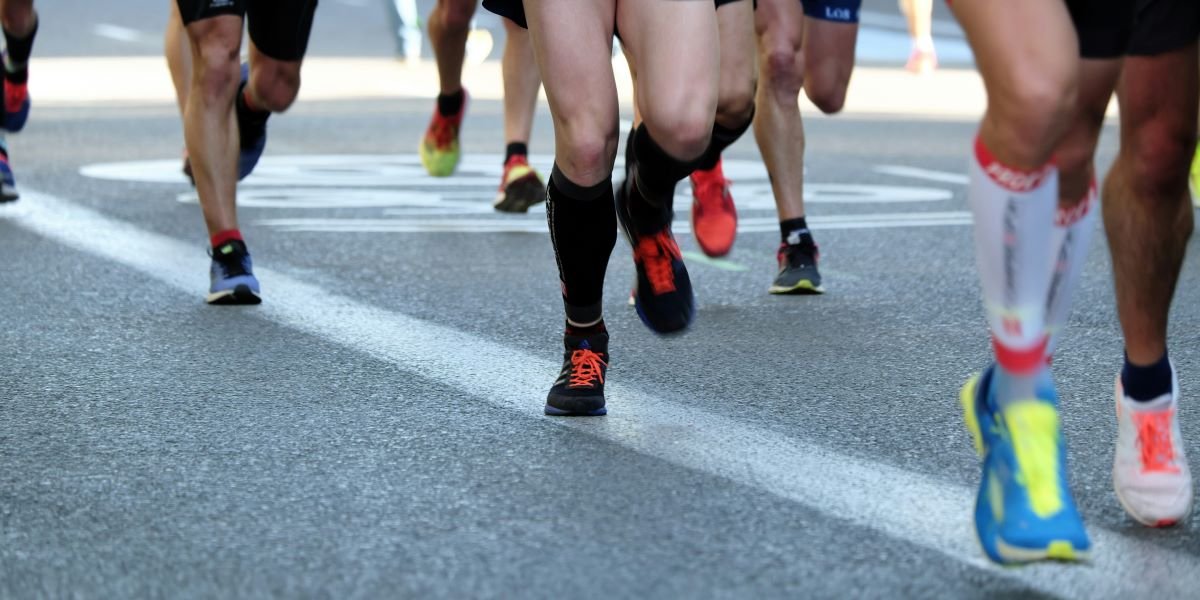
New York Road Runners staged the 45th edition of the New Balance 5th Avenue Mile on Sunday, September 13, drawing 8,600 runners and a professional field of 15 Olympians and 18 international medalists from 12 countries to a 20-block stretch of Fifth Avenue between the Metropolitan Museum of Art and Grand Army Plaza. The race also featured a Broadway Mile fundraiser heat with performers from current productions.
Key Takeaways
- The 45th New Balance 5th Avenue Mile took place Sunday, September 13, on a 20-block course running south along Fifth Avenue from East 80th Street to East 60th Street at Grand Army Plaza.
- A total of 8,600 runners competed across age-group heats organized with a color-coded bib system.
- The professional field included 15 Olympians and 18 international medalists representing 12 countries.
- A dedicated Broadway Mile heat featured performers from current Broadway productions running to raise funds for charitable causes.
- The point-to-point course has produced some of the fastest road mile times in history, though its elevation drop exceeds World Athletics limits for record ratification.
The Course Runs Through One of Manhattan’s Most Recognizable Cultural Corridors
The New Balance 5th Avenue Mile sends runners south along Fifth Avenue starting near East 80th Street, adjacent to the Metropolitan Museum of Art, and finishing at East 60th Street at Grand Army Plaza, the southeastern entrance to Central Park. The 20-block route passes through the heart of Museum Mile, a stretch of Upper East Side avenue that houses some of the most visited cultural institutions in the Western Hemisphere, including the Guggenheim, Cooper Hewitt, and the Neue Galerie.
The course layout has remained largely unchanged since New York Road Runners founded the event in September 1981. The first quarter-mile from East 80th Street to 75th Street features a slight downhill. The second quarter-mile to East 70th Street introduces an uphill. The third quarter-mile descends again before the final five-block stretch flattens out toward the finish at Grand Army Plaza. That combination of terrain, road surface, and crowd density has produced some of the fastest one-mile road times on record.
However, no time set on the 5th Avenue Mile course can count as an official World Athletics road mile world record. The point-to-point route through Manhattan exceeds the international federation’s downhill elevation drop limits for record ratification, meaning all fast performances are classified as event records rather than world records. Great Britain’s Josh Kerr set the current men’s course record at 3:44.3 in September 2024, breaking the 3:47.52 mark that South African runner Sydney Maree established at the race’s 1981 debut.
Fifteen Olympians and 18 International Medalists Headlined the Professional Heats
The elite field that New York Road Runners assembled for the 45th edition reflected the event’s standing as an annual draw for international middle-distance talent. Fifteen athletes who have competed at the Olympic Games were in the field, alongside 18 medalists from World Championships, Commonwealth Games, and European Championships. The 12 countries represented in the professional heats spanned five continents.
Among the headliners on the men’s side were Kenyan Olympians Simon Koech and Leonard Bett, both making their 5th Avenue Mile debuts after earning medals at the 2026 Commonwealth Games in the steeplechase. Australian middle-distance runner Olli Hoare, a two-time Olympian, returned to the course and described the energy of running down Fifth Avenue in front of a New York crowd as a performance catalyst. Adam Spencer of Australia, a 2026 World Indoor Championships 1,500-meter bronze medalist, was also in the field, along with Dutch European champion Stefan Nillessen and Welsh Olympian Jake Heyward, a two-time podium finisher at the event. On the American side, Luke Houser, a 2025 World Indoor Championships bronze medalist, and Cooper Teare, a 2022 U.S. champion, added depth to the domestic field.
The Broadway Mile Heat Connected the Stage to the Street
One of the distinguishing features of the 5th Avenue Mile is the Broadway Mile, a dedicated heat that brings performers from current Broadway productions onto the same course the professionals race. The heat serves as both a community showcase and a fundraiser, with Broadway cast members running to raise money for charitable causes connected to the theater industry.
The crossover between Manhattan’s performing arts community and its running culture is not incidental. The Museum Mile corridor has become a recurring backdrop for cultural programming that extends beyond gallery walls, from the annual Museum Mile Festival to outdoor performances in Central Park. The 5th Avenue Mile adds a competitive, athletic dimension to that same stretch of pavement, merging the performing and sporting identities of the Upper East Side into a single Sunday morning.
Age-Group Heats Used a Color-Coded Bib System for 8,600 Runners
Beyond the elite and Broadway heats, 8,600 runners competed across a series of age-group waves organized by New York Road Runners using a color-coded bib system. Each bib color corresponded to a specific corral assignment, allowing organizers to stage the event efficiently along a course that occupies one of Manhattan’s busiest thoroughfares. Runners in the age-group heats covered the same point-to-point route as the professionals, sharing the road with the same landmarks and crowd infrastructure.
New York Road Runners maintains a nonbinary gender division across its major events, including the 5th Avenue Mile, with dedicated scoring and prize money eligibility established in 2021. Runners register as woman, man, or nonbinary. Each registrant received a pair of New Balance tech shorts as part of their race entry.
The Event’s Origin Traces to a 1981 Race That Broke Barriers
The 5th Avenue Mile debuted in September 1981 under unusual circumstances. The inaugural professional field included South African NCAA champion Sydney Maree, who received clearance to compete at a time when international athletic boycotts against South Africa during apartheid restricted participation for athletes from that country. Maree’s inclusion, and his course record that day, gave the event immediate legitimacy in the middle-distance world and established a competitive standard that has drawn top-tier talent every year since.
Forty-five editions later, the race has evolved from a niche road mile into one of the signature events on the New York Road Runners calendar. The organization, which also produces the TCS New York City Marathon, uses the 5th Avenue Mile as a fall-season showcase that pairs elite competition with mass participation, giving recreational runners the experience of racing on the same course, in the same conditions, as Olympic-level athletes.
FAQs
What Is the Course for the New Balance 5th Avenue Mile?
The race covers a straight 20-block route running south along Fifth Avenue from East 80th Street, near the Metropolitan Museum of Art, to East 60th Street at Grand Army Plaza. The course features a slight downhill in the first quarter-mile, an uphill second quarter, a gentle downhill third quarter, and a flat five-block sprint to the finish.
Why Don’t Times Set at the 5th Avenue Mile Count as World Records?
World Athletics requires that point-to-point road race courses stay within specific elevation drop limits for times to be ratified as world records. The 5th Avenue Mile course exceeds those limits, so performances are classified as event records rather than official world records, regardless of how fast the times are.
What Is the Broadway Mile?
The Broadway Mile is a dedicated heat within the 5th Avenue Mile that features performers from current Broadway productions running the same course as the professional and age-group fields. The heat doubles as a fundraiser for charitable causes connected to the theater community.
How Many Runners Participated in the 2026 Race?
A total of 8,600 runners competed in the 45th edition on September 13, 2026, across multiple age-group heats organized with a color-coded bib system. The professional field included 15 Olympians and 18 international medalists from 12 countries.