There has long been an awkward middle ground in the art world, a territory between the mass-produced prints sold in furniture stores and the original works that rarely leave white-walled galleries unless someone writes a significant cheque. For most people decorating a home or a professional space, that gap has meant settling for either spending money on something forgettable or admiring work they cannot realistically own. It is a tension the art market has never quite resolved, and for years, very few studios bothered trying.
11 : ACE, the Los Angeles–born studio founded in 2023, emerged from exactly that observation. Its proposition is not complicated on the surface: limited-edition artwork, produced to museum-quality standards, priced to reach collectors who have been effectively locked out of gallery culture. But the execution, and the philosophy underpinning it, is more considered than a straightforward market disruption story might suggest.
A Different Approach to Collectible Art
The studio’s starting point was photography, specifically, original work that carries genuine artistic intent but rarely finds its way into the homes of people who would most appreciate it. Rather than simply printing and framing images, “11 : ACE” blends and reworks photographic source material with fine art influences, producing pieces that feel compositionally deliberate and visually layered in a way that straight photography often does not.
Each release is issued in limited editions, a decision as much about integrity as commercial strategy. The scarcity is not manufactured for effect; it reflects a commitment to the work remaining meaningful over time. Limiting each release preserves a relationship between the artwork and the people who own it, a quality more common in fine art publishing than in the décor world the studio partly inhabits.
Growth Across Markets
What surprised the studio in its earliest months was the speed of European interest. Los Angeles provided the cultural foundation, but enquiries from across the Atlantic arrived almost simultaneously with domestic recognition. European collectors, particularly those in markets where gallery culture is strong but access still feels gatekept, responded with unusual enthusiasm.
By 2024, operations had shifted to Miami, a logical rather than aspirational move. The city had become one of the more compelling intersections of art, luxury interiors, and international money, shaped in part by Art Basel Miami Beach’s long cultivation of it as a collecting hub. For a studio working at the junction of art and interior design, Miami offered an audience and infrastructure that Los Angeles could not quite replicate.
Craftsmanship as Identity
The studio’s reputation, particularly the speed at which it was built, owes a great deal to its production standards. Museum-quality canvas, carefully controlled color depth, rigorous attention to composition sharpness, and a presentation ethos borrowed from fine art printing houses rather than commercial reproduction. The studio backs its work with a lifetime warranty, a commitment that signals confidence in the materials and an understanding that collectors expect longevity.
In a category where the gap between marketing language and actual quality is often considerable, this consistency matters. The contemporary collector has become notably more discerning. They notice when colour rendition is flat or when a canvas is stretched slackly. Quality control, at “11 : ACE”, functions less like a department and more like editorial oversight, applied at every stage of production.
From Miami to Dubai
The studio’s move toward Dubai, planning began in 2025, with the transition completing in 2026, reflects something broader than geographic ambition. The UAE has spent the last decade building a serious art and design infrastructure, with Art Dubai emerging as a respected fair alongside a residential property market that increasingly prizes considered interiors, creating conditions where a studio like “11 : ACE” finds natural traction.
The collector profile in Dubai also suits the studio’s positioning well. Many of the city’s art buyers are not coming from established collecting traditions; they approach artwork with fresh eyes and a strong instinct for quality and long-term value. The absence of inherited assumptions about what collecting should look like can work in a studio’s favour, particularly one offering work that sits between established categories.
The Philosophy Behind 11 : ACE
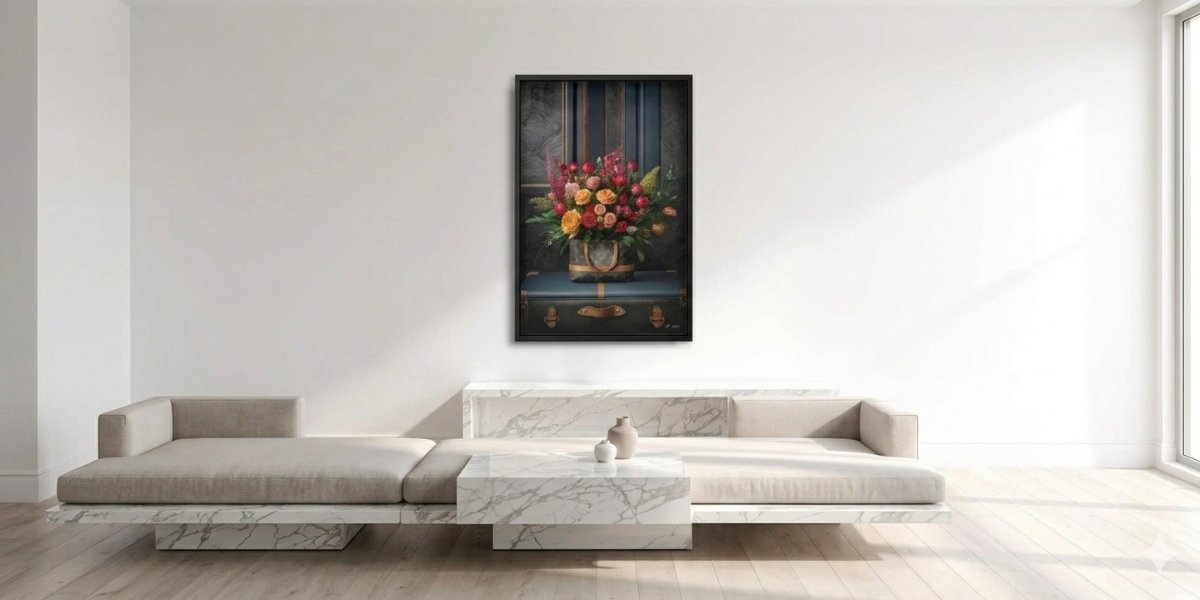
The studio’s underlying argument, held with some conviction, is that strong artwork should exist in the spaces where people actually live and work, not reserved for institutions or the narrow tier of collectors wealthy enough to access them. Most attempts to act on this sentiment have ended in one of two failures: either quality suffers in the service of accessibility, or accessibility suffers in the service of exclusivity.
11 : ACE’s response has been structural rather than promotional. Limited editions preserve scarcity without pricing out a broader audience. Museum-quality production creates objects with genuine material value. And framing the work as part of an interior environment, rather than art hung apologetically in a room designed around furniture, reflects a shift already well underway among architects, interior designers, and their clients. The era of art as afterthought is, in certain design circles, largely over.
Looking Forward
With the Dubai base established and new releases scheduled across 2026, the studio’s horizon is one of consolidation and careful expansion. The international footprint, Los Angeles, Miami, Dubai, covers a significant portion of the world’s appetite for design-conscious, quality-oriented collectible art. Further territories are a reasonable expectation; the question is whether production standards and editorial coherence can hold as the scale increases.
Studios like 11 : ACE reflect something genuinely interesting about the current moment in collecting: the gradual dissolution of the boundary between art ownership and interior culture. For a generation of buyers who approach their living spaces as curated environments, the distinction between a collectible object and a design element has become largely academic. The work either belongs in the space, or it does not. On that measure, the studio has found its audience, and its audience, it seems, was waiting.