By: Shawn Mars
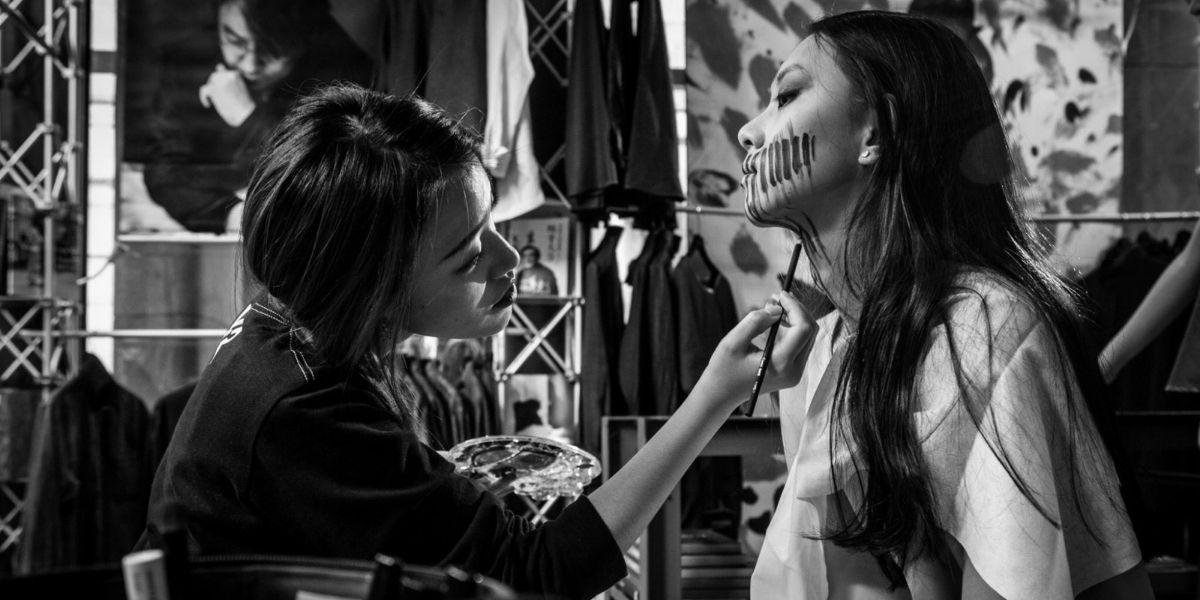
A multidisciplinary artist working behind the scenes as a textile artist, ager and dyer, makeup and hair artist, fabric painter, and costume and wig technician.
For Sophie Lin, art has never been separate from daily life. It lives in the quiet of an early morning, in the touch of pigment on fabric, in the memory of her father’s voice, and in the belief that creating is as natural and necessary as breathing. Her work may unfold behind the curtain or beyond the camera’s frame, but it carries the same intention into every medium: to notice closely, to make with care, and to transform what she has lived into something that can reach another person.
A Morning Built on Gratitude and Stillness
Sophie begins each morning with gratitude. Before reaching for her phone, she gives thanks for the people she loves and for the simple gift of another day. Then she makes her bed, lights incense for prayer, practices yoga and meditation, and lets coffee brew quietly in the kitchen.
“I try not to let technology enter those first moments of the day. I want my mind to be clear and present before the world begins asking things of me. Meditation feels like emptying a cup. It gives me space to ask: What can I offer to the world today?”
She has practiced yoga and meditation for about six years, learning to quiet the reactive, instinctive part of the mind and return to a steadier awareness. The ritual is not reserved for easy mornings. Even when a film call begins at 6 a.m., she wakes earlier so she can begin the day in the same way. That stillness sharpens her eye for the small details from which creative ideas often grow.
That way of seeing follows Sophie into costume shops, dressing rooms, studios, theaters, and film sets. As a multidisciplinary artist, she works behind the scenes as a textile artist, ager and dyer, makeup and hair artist, fabric painter, and costume and wig technician. To her, these practices are not separate identities competing for space; they are different expressions of the same creative instinct.
“Creativity does not need to belong to one medium. Textile art, fabric painting, makeup, hair, costumes, and wigs are simply the forms it chooses in a particular moment. I want to stay fluid enough to follow where the work wants to go.”
Beneath her morning ritual is a lesson she learned young: everything changes. Her parents taught her that even the most ordinary part of a day can become remarkable when it is met with full attention. Impermanence, for Sophie, is not an abstract idea. It is a reason to love the present more deeply.
A Philosophy Passed Down Through Her Father’s Words
At the center of Sophie’s creative life is a passage her father shared with her during a season of teenage self-doubt. She has carried his words ever since:
“At sixteen, you must begin by gathering the points of life. At twenty, you will draw the lines of your thoughts. At thirty, you will shape the planes of your existence. And from there, you will create a whole body of work capable of influencing the world. Creating is as essential as breathing. Keep returning to your breath, nurture a rhythm of your own, and you will never forget how to create. You possess an extraordinary talent and a heart full of love. These are your greatest treasures.”
“Whenever I doubt myself, I return to what my father told me. His words are more than advice; they are a compass. They remind me that I do not have to force my path all at once. I only have to keep breathing, keep creating, and keep finding my own rhythm.”
Growing Up Surrounded by Art and Literature
Sophie grew up in Taiwan in a home filled with books, paintings, and long conversations about creativity. Her father was a prolific Taiwanese author, while her mother was a designer who led a cultural foundation. Both had known hardship in childhood, and both understood how much courage it can take to remain faithful to what you love when the world offers little encouragement.
Her father was born in the 1950s into a large farming family with eighteen siblings and limited resources. At a time when a safe future meant teaching or securing a government position, he decided at eight years old that he would become a writer. Nearly everyone around him thought it was impossible. He published his first book at seventeen, went on to write hundreds of books, and traveled the world doing precisely what others had told him he could not do.
“My parents never taught me that an artistic life would be easy. They taught me that the things we love are worth protecting, especially when they are difficult. I grew up watching them turn hardship into generosity and imagination. That became part of how I understand art.”
Sophie’s own turning point came at nine. One afternoon, heartbroken after dropping her favorite ice cream, she went into her father’s studio to be alone. On his desk were colored pencils and a sketchbook, warmed by the afternoon light. She began drawing the view from the window: plants on the balcony, distant mountains, and the shifting light on the leaves. Soon, she had forgotten the ice cream and lost all sense of time.
“When I finished, I looked outside, and the leaves seemed to glitter in the sun, almost as if they were smiling at me. I suddenly understood that art could take the beauty I felt inside and make it real. I ran downstairs and told my parents, “I am going to be an artist.” Drawing had comforted me, and even then I thought: maybe one day, what I create can comfort someone else too.”
Learning to Carry Love Through Loss
At eighteen, Sophie moved to the United States for college and lived far from home for the first time. Her days filled quickly with demanding studio projects, while the time difference made calls with her family difficult. During her first winter break, she returned to Taiwan for only three weeks. Like many young people, she assumed there would always be more time with her parents, and she spent much of the visit seeing friends.
On the final day, her father drove her to the airport. For the first time, she saw him cry. He told her that he was writing a new book about her and that he was proud of the person she was becoming.
“I cried for most of the sixteen-hour flight from Taipei to New York, but they were tears of gratitude. I remember thinking how fortunate I was to have been born into such a loving family. Shortly after I landed, my brother called. My father passed away peacefully in his sleep, not long after we said goodbye.”
In Mandarin Chinese, the word for goodbye, 再見, literally means ‘see you again.’
The tenderness of that promise made the loss even more difficult to accept. Yet on the long journey home, Sophie encountered kindness from strangers. One man, who had also lost his father when he was young, pointed to the night sky and told her that those we love become stars watching over us. A woman shared her cultural belief that a person’s energy remains among the people and places they loved.
“I was in so much pain, but people I had never met offered me their stories and their tenderness. Their kindness felt like a message: love and humanity do not simply disappear. They move through us, and then it becomes our responsibility to carry them forward.”
Years later, Sophie found language for grief in an idea often associated with Lois Tonkin: we do not simply ‘move on’ from grief, nor does grief necessarily shrink. Instead, life slowly grows around it. The wound remains, but so do love, wisdom, friendship, work, and all the experiences that continue to enlarge a life.
“I do not think our wounds completely vanish, and I no longer believe they have to. They become marks that remind us who we are and who we hope to become. Losing my father taught me the true weight of impermanence: love people fully while there is time, and never stop creating. If I can transform even part of that pain into beauty or wisdom, perhaps it can become a light for someone else who is still searching in the dark.”
What Sophie Lin Hopes to Leave Behind
When asked about legacy, Sophie returns to a Buddhist story she often heard in childhood. A wildfire swept through a forest, and all the animals fled. One small pigeon flew to a river, carried a single drop of water back in its beak, and released it over the flames. The other animals laughed: one drop could never extinguish such a fire.
Still, the pigeon flew back and forth, carrying one drop and then another. Moved by the bird’s sincerity and persistence, the sky finally wept with rain. The fire quieted, and the forest found peace again.
“I think artists and creators are like that little pigeon. What we do may look small against a world that feels chaotic or wounded, but we return with whatever clean water our hearts can carry. We keep creating from sincerity, compassion, and hope. One drop may not change everything on its own, but that does not make the offering meaningless.”
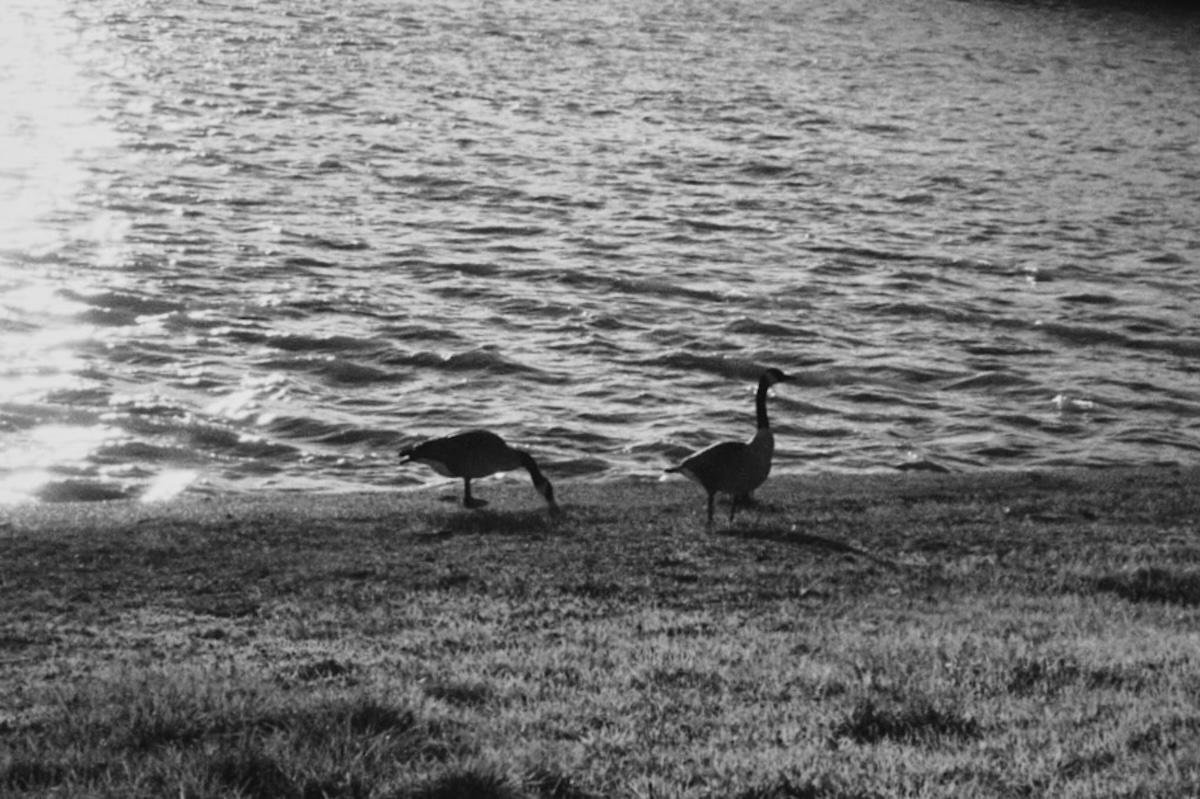
That is what Sophie hopes will outlast any single work: not one dramatic gesture, but a practice of care passed from one person to another and from one generation to the next – drop by drop – until the fire grows smaller and the world moves a little closer to peace.
“I hope people remember not only what I made, but the love with which I made it. My father taught me that talent and a heart full of love were my greatest treasures. My work is my way of continuing that love.”
Explore Sophie’s work: Sophie Lin’s art portfolio or follow along on Instagram.