By: Matthew McFilt
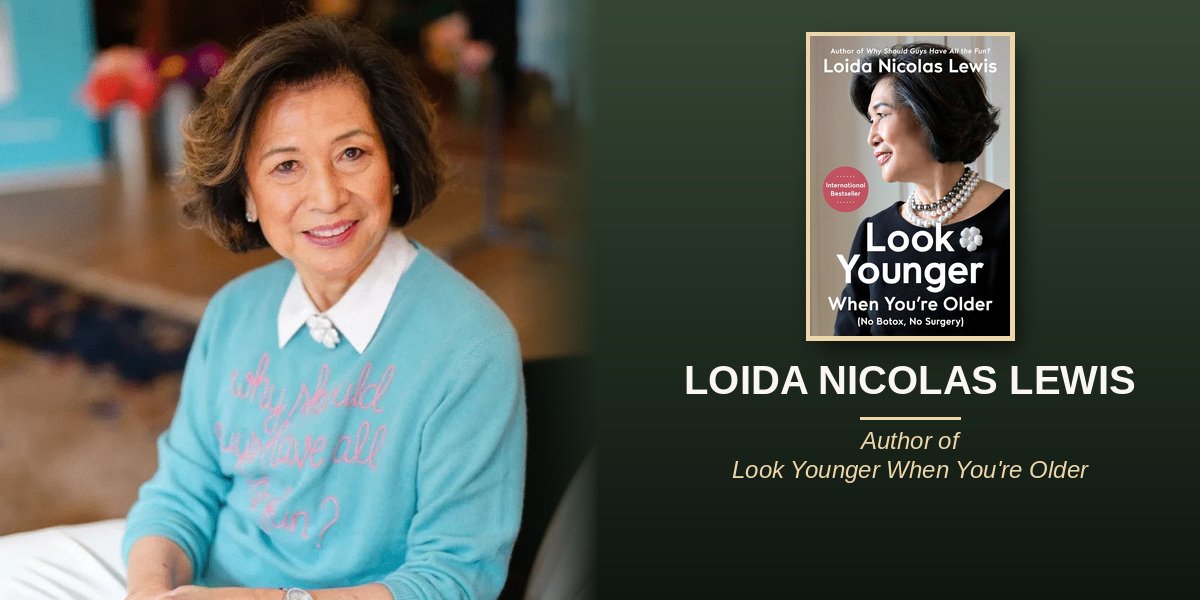
The cosmetic procedures industry has never been larger. Reports from international aesthetic societies place the number of procedures performed each year globally in the tens of millions, with growth accelerating year over year. Against that backdrop, a book called No Botox, No Surgery is making a different argument, and it is coming from someone whose appearance makes the argument hard to dismiss. Loida Nicolas Lewis is in her eighties. She looks like someone who has found a way to age outside the usual terms. And she has written down how.
Look Younger When You’re Older is not an anti-cosmetic manifesto. Lewis is careful to say she does not judge those who choose procedures. What she is doing is offering an alternative framework, one grounded in daily practice, inner discipline, and a philosophy of life that she has refined across eight decades of remarkable experience. She is sharing it because she has been asked, over and over, what she does. She decided that the answer deserved a book rather than a conversation.
Lewis came to New York from the Philippines, earned a law degree in Manila, and passed the New York State Bar without attending an American law school, an achievement that remains rare. She married Reginald F. Lewis and built a life alongside one of the most consequential business figures of his generation. After his death, she became CEO of TLC Beatrice and led the company through a carefully managed wind-down. She then turned to civic work, philanthropy, and advocacy with the same focused energy she had brought to everything else. She launched a podcast in her late seventies. She wrote a memoir. And now, in her eighties, she has written this.
The book is organized around the premise that outer vitality is downstream of inner condition. The first chapters cover Lewis’s meditation practice, her faith, her daily habits of reflection, and the gratitude practice she has built into her routine. She writes about these things with the precision of someone who has thought carefully about why they work, not just that they work. The practical chapters follow: skincare, hydration, exercise, the routines she has developed over decades and refined through consistent attention. She names specific products and explains the logic behind her choices, including affordable options she genuinely uses.
Several of her friends contribute their own tips, adding a texture of community that reflects how Lewis actually lives. She has never operated as a solo figure. Her networks of connection, from civic organizations to philanthropic boards to personal friendships, run through her life as a constant current, and they appear in this book as evidence that aging well is partly about who you keep close.
What makes this book unusual is not its subject matter but its credibility. The person writing it has actually done the things she describes, for years, and the results are visible. She is not theorizing about what might work. She is reporting on what has.
The book does not ask very much of the reader in terms of time, at 151 pages. It asks a great deal in terms of commitment. The practices Lewis describes require consistency and intention. What she promises in return is not a cosmetic result but something more lasting: a way of inhabiting your age with presence and power.
Look Younger When You’re Older is available on Amazon.