By Dr. Bruce Mark, DC | Hollywood Laser Pain Center | Hollywood, Florida
Degenerative disc disease is among the most common diagnoses in spine care, yet also among the most misunderstood. Patients across Broward County are told their discs are degenerating as though this is a fixed, irreversible fate, and that pain management is the only realistic response. The research tells a different story. Discs are metabolically active structures capable of responding to clinical intervention. The Regenerative Medical Laser™ protocol, combined with Graston Technique and structural chiropractic care, is designed to address the disc environment, the inflammatory factors associated with disc-related pain, and the mechanical influences associated with the degenerative cascade.
Degenerative disc disease is progressive. Every year of untreated disc compression and inflammation can advance the degenerative cascade. The patients who benefit most from non-surgical intervention are often those who intervene before structural changes become irreversible.
At Hollywood Laser Pain Center, I have spent more than 27 years as a chiropractor caring for patients with degenerative disc disease, using an approach that targets the modifiable drivers of disc-related pain rather than treating the imaging finding as an irreversible verdict.
What Is Degenerative Disc Disease and What Causes the Pain?
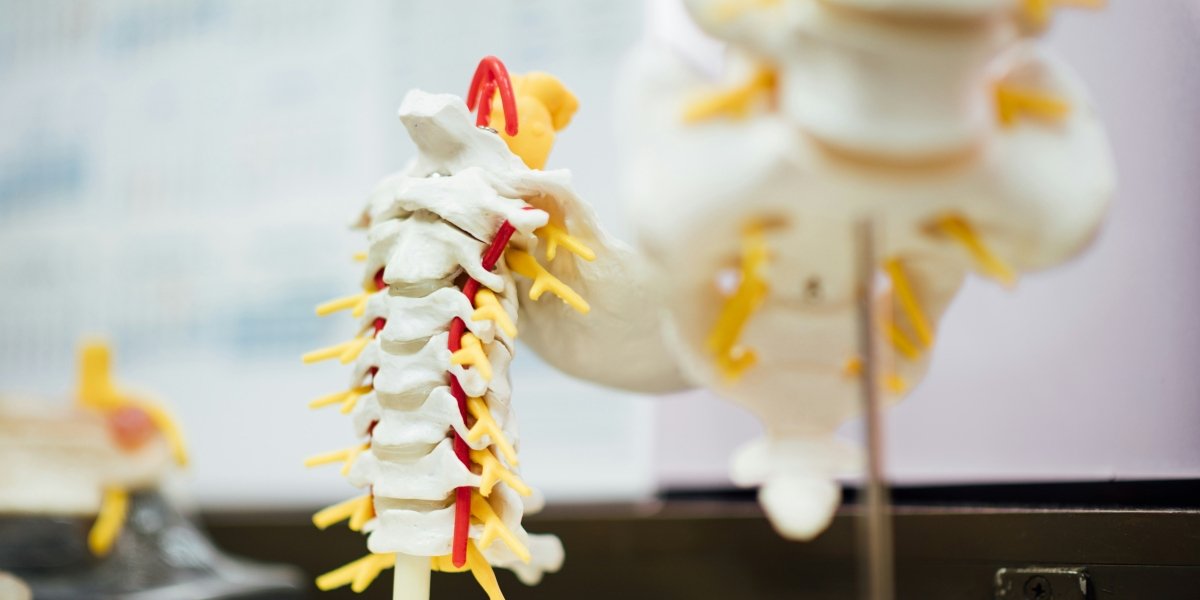
Degenerative disc disease describes age-related and mechanically driven changes in intervertebral discs: loss of disc hydration, reduction in disc height, development of annular tears, and eventual disc space collapse. A 2015 study in the American Journal of Neuroradiology found that disc degeneration is visible on MRI in over 90 percent of adults by age 60, most of whom are asymptomatic. Disc degeneration is a radiological finding. By itself, it is not a guarantee of pain.
What determines whether DDD becomes clinically significant is the inflammatory environment around affected segments, the biomechanical loading patterns imposed on the degenerating disc, and individual neurological sensitivity. Each of these factors is modifiable, which informs the therapeutic rationale behind the Regenerative Medical Laser™ protocol.
What Does the Research Say About Disc Nutrition and Non-Surgical Intervention?
Adult discs have no direct blood supply. They receive nutrients by diffusion through end plate permeability, which depends on intermittent compressive loading to create a pumping mechanism. Chronic compressive loading without adequate decompression can impair this diffusion, creating a metabolic environment unfavorable to disc cell survival.
Photobiomodulation, the broader category of therapeutic laser modalities that includes the Regenerative Medical Laser™ protocol, has been studied for its proposed effects at the cellular level, including influence on cellular activity, inflammatory cytokines such as TNF-alpha and IL-1, and the surrounding tissue environment. Published research has examined photobiomodulation in chronic spinal pain populations, including patients with disc-related presentations.
What Does the Graston Technique Add for DDD Patients?
The paraspinal soft tissue restrictions that develop in many DDD patients, from chronic protective guarding and acute injury episodes, can maintain abnormal compressive loading on degenerated segments regardless of how well the disc itself is being treated. Graston Technique is designed to release these restrictions, with the goal of restoring tissue mobility and easing mechanical forces that may perpetuate disc stress.
What Is the Postural and Structural Component of DDD Management?
A patient with flattened lumbar lordosis places their lumbar discs under sustained anterior shear and compressive force, factors that may accelerate degeneration regardless of how well the current pain episode is managed. Chiropractic care focused on spinal alignment is intended to address this structural loading factor, with the aim of reducing chronic mechanical stress that may contribute to DDD independently of the current symptomatic episode.
For DDD patients in Hollywood, Hallandale Beach, Pembroke Pines, and across Broward County whose degenerative changes are being driven partly by postural and structural factors, this dimension of care is what distinguishes a treatment protocol from a symptom management protocol.
To learn more about Hollywood Laser Pain Center, visit the Hollywood provider page on ReliefNow Laser. Additional patient education content is available on the ReliefNow Nation YouTube channel. Contact Hollywood Laser Pain Center at 2607 Polk Street, Hollywood FL 33020 | 954-925-7333.
About the Author
Dr. Bruce Mark, DC | Hollywood Laser Pain Center | 2607 Polk Street, Hollywood FL 33020 | 954-925-7333 | reliefnowlaser.com/providers/hollywood/
Dr. Mark earned his Doctor of Chiropractic with honors from Logan College of Chiropractic and has practiced as a chiropractor for more than 27 years. He holds certifications in Graston Technique and acupuncture, is a former collegiate football player at Wake Forest University, and practices at Broward Medical and Rehab. He is a provider in the national ReliefNow® network.
Disclaimer: The information provided in this article is for general informational purposes only and should not be construed as medical advice. The effectiveness of treatments may vary depending on individual circumstances. Consult a qualified healthcare professional to discuss your specific medical needs and treatment options.