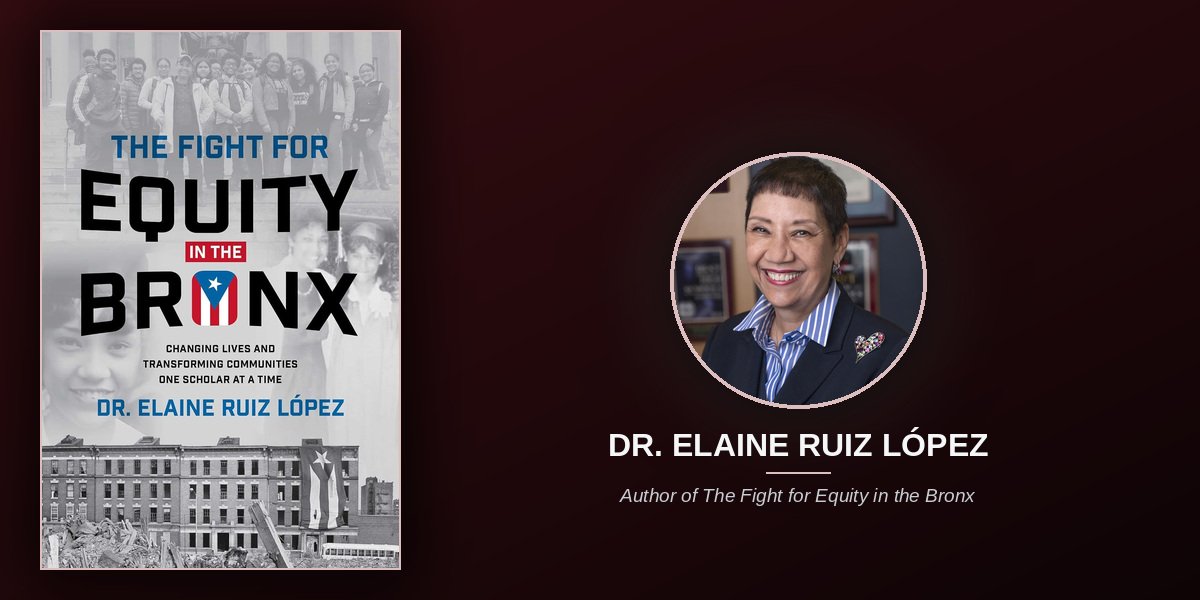
By: Fabiana Barbery
The word equity gets used so frequently in education conversations that it has started to lose its edges. It becomes a value that everyone endorses in principle and that somehow never produces the concrete changes it implies in practice. It becomes a goal that appears in strategic plans and mission statements and policy documents without necessarily changing what happens to a child on a Tuesday afternoon in a classroom in the South Bronx.
Dr. Elaine Ruíz López is not interested in equity as a principle. She is interested in equity as something that happens to a child every day inside a school building. Her definition is concrete and demanding in ways that abstract commitments to equity rarely are.
Equity means rigorous instruction. It means high expectations that are held consistently and not adjusted downward because of where a student comes from or what circumstances they carry. It means teachers who genuinely believe students are capable of learning at a high level and who structure their teaching accordingly. It means accountability for the quality of education being provided, and a categorical refusal to decide that something is good enough simply because a child comes from an underserved community. It means, most fundamentally, that the quality of education a child receives is not determined by race, income, immigration history, neighborhood, or ZIP code.
That definition has teeth. And it is the definition that shaped every decision made at International Leadership from the day the school was founded.
The Confusion Between Equal and Equitable
One of the most important distinctions Dr. Elaine makes throughout the book is between equal treatment and equitable opportunity. These are not the same thing, and treating them as equivalent has been one of the most persistent failures of educational policy.
A child who arrives at school facing circumstances that children in affluent districts do not face does not need to be treated identically to a child who doesn’t carry those circumstances. Identical treatment of people in different situations produces different outcomes. Equitable opportunity means providing the specific support, rigor, and expectations that allow every child to reach the same destination, not the same starting experience.
Policymakers, Dr. Elaine argues, consistently confuse these two things. The result is policy that describes equity without producing it. Funding formulas that technically distribute resources without accounting for the different levels of need those resources have to meet. Standards that are nominally the same across districts without addressing the very different conditions in which those standards are being pursued. An equity framework that looks right on paper and fails children in practice because the gap between the paper and the classroom was never adequately examined.
What Policymakers Keep Missing
Dr. Elaine has a specific message for the people who make decisions about education in communities like the Bronx. Excellence is not created by a policy document. It is created every day, inside a school building, through high expectations, accountability, rigorous instruction, and an unwavering belief in what young people are capable of achieving. If the policy doesn’t change those daily conditions, it hasn’t changed anything.
Too often children from underserved communities are approached through the lens of what they lack rather than what they carry. International Leadership was built on a different premise. Begin with potential. Create an environment that expects students to rise to it. Refuse to allow a child’s circumstances to become the ceiling of their educational experience.
That approach requires adults who are willing to hold a higher standard for themselves and their institutions, not just for their students. It requires accountability in both directions. And it requires the courage to reject the comfortable position that what is being provided is good enough when the evidence says otherwise.
If you want to understand what educational equity actually requires, Dr. Elaine Ruíz López has lived the answer. The Fight for Equity in the Bronx: Changing Lives and Transforming Communities One Scholar at a Time is available now on Amazon.