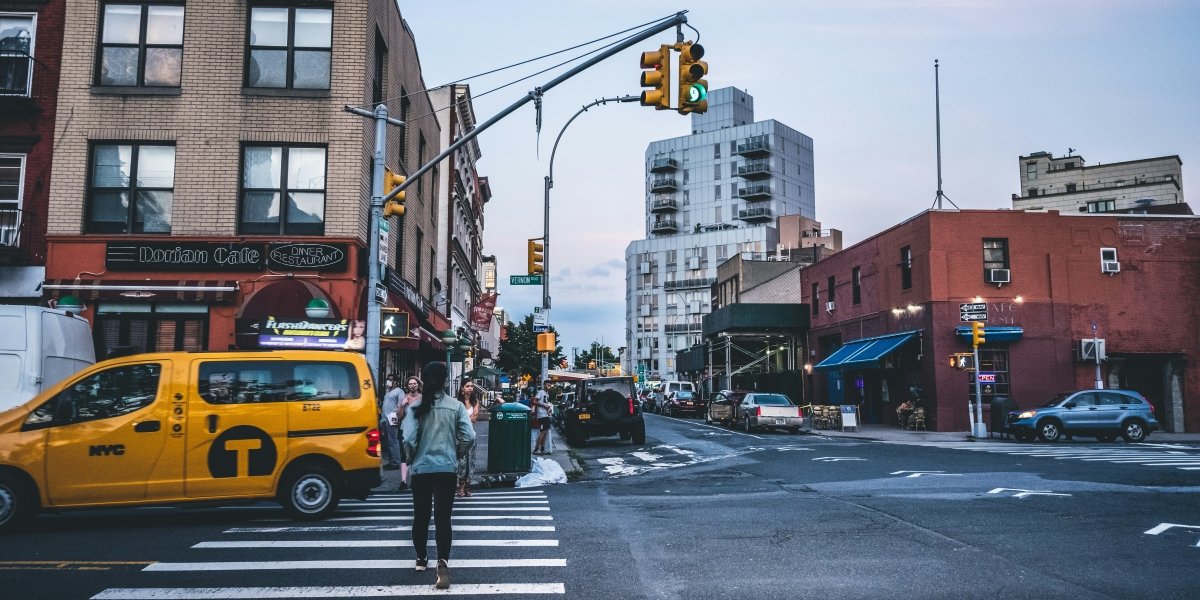
New York City is often seen as a place of constant movement and modern change. However, beneath the bright lights and tall skyscrapers lies a deep history that shaped not only the city but also the United States. Walking through the streets of Manhattan and the surrounding boroughs feels like moving through a living museum. To understand the heart of this city, one must look at the landmarks that have stood for over a century.
The Statue of Liberty: A Symbol of Hope
No journey through New York’s history is complete without visiting Liberty Island. The Statue of Liberty was a gift from the people of France to the United States in 1886. It was designed to celebrate the end of the American Civil War and the abolition of slavery. Over time, it became the primary symbol of freedom for millions of people arriving in the country.
The statue is a feat of engineering. The copper skin is very thin, about the thickness of two pennies, yet it has survived harsh ocean winds for 140 years. Inside, a steel frame designed by Gustave Eiffel, who later built the Eiffel Tower, keeps the structure stable.
According to the UNESCO World Heritage Centre, this landmark is “a masterpiece of the human spirit” because it brings together art and engineering in a powerful way. It represents the shared values of democracy and opportunity. For many, the most moving part of the statue is the poem by Emma Lazarus found at the base, which famously says, “Give me your tired, your poor, your huddled masses yearning to breathe free.”
Ellis Island: The Gateway to America
A short ferry ride away sits Ellis Island. Between 1892 and 1954, this island was the busiest immigration station in the country. More than 12 million people passed through its Great Hall to start new lives. Today, it serves as a museum that tells the stories of these individuals.
Historians often call Ellis Island the “Island of Hope” for those who were allowed to enter, but also the “Island of Tears” for the small percentage who were sent back to their home countries. The inspection process usually took three to five hours. Doctors and officials checked each person for health issues and legal records.
The National Park Service notes that the island is essential for understanding American identity. Many families today can still trace their ancestry back to a single person who stepped onto those docks with nothing but a suitcase.
The Empire State Building: Reaching for the Sky
In the 1930s, New York entered a race to build the tallest building in the world. The winner was the Empire State Building. Completed in 1931 during the Great Depression, it was built in just over one year. This speed was incredible for the time and showed the determination of the city during a difficult economic period.
The building is famous for its Art Deco style, which uses geometric shapes and bold lines. It remained the tallest building in the world for 40 years. Even today, it defines the skyline. Author Ayn Rand once wrote that the skyline of New York is a monument of splendor that “no pyramids or palaces will ever equal or approach.” The Empire State Building is the center of that monument.
Grand Central Terminal: A Masterpiece of Travel
Midtown Manhattan is home to Grand Central Terminal, which opened in 1913. While many see it as just a train station, it is actually an architectural treasure. The ceiling of the Main Concourse features a beautiful painting of the stars and constellations.
Grand Central was nearly destroyed in the 1960s to make room for new office buildings. However, citizens including Jacqueline Kennedy Onassis fought to save it. Because of their efforts, the Supreme Court protected the building, ensuring it would remain for future generations. The official history of the terminal describes it as the “culmination of an era” that transformed how people moved through the city.
The Brooklyn Bridge: An Engineering Wonder
The Brooklyn Bridge, completed in 1883, was the first bridge to use steel for its cable wire. At the time, many people were afraid to cross it, doubting that such a long bridge could stay up. To prove it was safe, a famous circus leader named P.T. Barnum led 21 elephants across the bridge in 1884.
The bridge connected the separate cities of New York and Brooklyn, eventually leading them to join into one giant metropolis. Its neo-Gothic arches are still some of the most recognizable shapes in the world. It serves as a reminder that the city was built on innovation and the courage to try new things.
Celebrating 250 Years of History
Looking toward the summer of 2026, these landmarks will take on even more importance. The United States will celebrate its 250th anniversary, and New York City will be at the center of the festivities. As the nation’s first capital, the city plans to hold massive events at these historical sites.
One major event, known as Sail250, will feature a parade of large sailing ships passing the Statue of Liberty on July 4, 2026. This celebration highlights how the city continues to honor its past while moving into the future.
Exploring these sites is more than just looking at old buildings. It is a way to see the struggles, successes, and dreams of the people who built the modern world. Each stone and steel beam tells a story of hope and progress.