By: Elena Hart
Jiayi Yu, born in China in 2000 and currently based in the United Kingdom, is an emerging interdisciplinary artist whose work reimagines digital imaging through a deeply personal, tactile lens. Educated at the London College of Communication and the Royal College of Art, Yu has developed a signature methodology using the flatbed scanner—not as a tool for replication, but as a performative surface of contact and resistance. Her series Touch Me exemplifies this approach: each work is created through direct physical engagement with the scanner glass, pressing parts of her body—face, hands, fragments of skin—into a machine typically designed for bureaucratic documentation. What emerges are not portraits, but residual imprints: distorted, fragmented, blurred traces of intimacy. These images, operating more like emotional topographies than visual depictions, challenge the normative politics of clarity and recognition embedded in traditional photography and digital imaging.
The title Touch Me functions both as an invitation and a provocation. It implicates the viewer in a sensory exchange, but resists the voyeuristic gaze. Rather than delivering fixed representations, the works present ambiguous textures and partial forms, refusing legibility. The resulting images—smudged, stretched, soft—speak in the language of presence through absence, inviting viewers to sense rather than decipher. In a time dominated by high-resolution imagery and algorithmic optimization, Touch Me asserts distortion, fragility, and slowness as political strategies. It moves away from consumption and toward reflection, transforming the act of looking into one of feeling. Yu calls this a “tactile image strategy”—an approach where the scanner functions as a “blind photographer,” capturing not appearance but affect, not representation but residue.
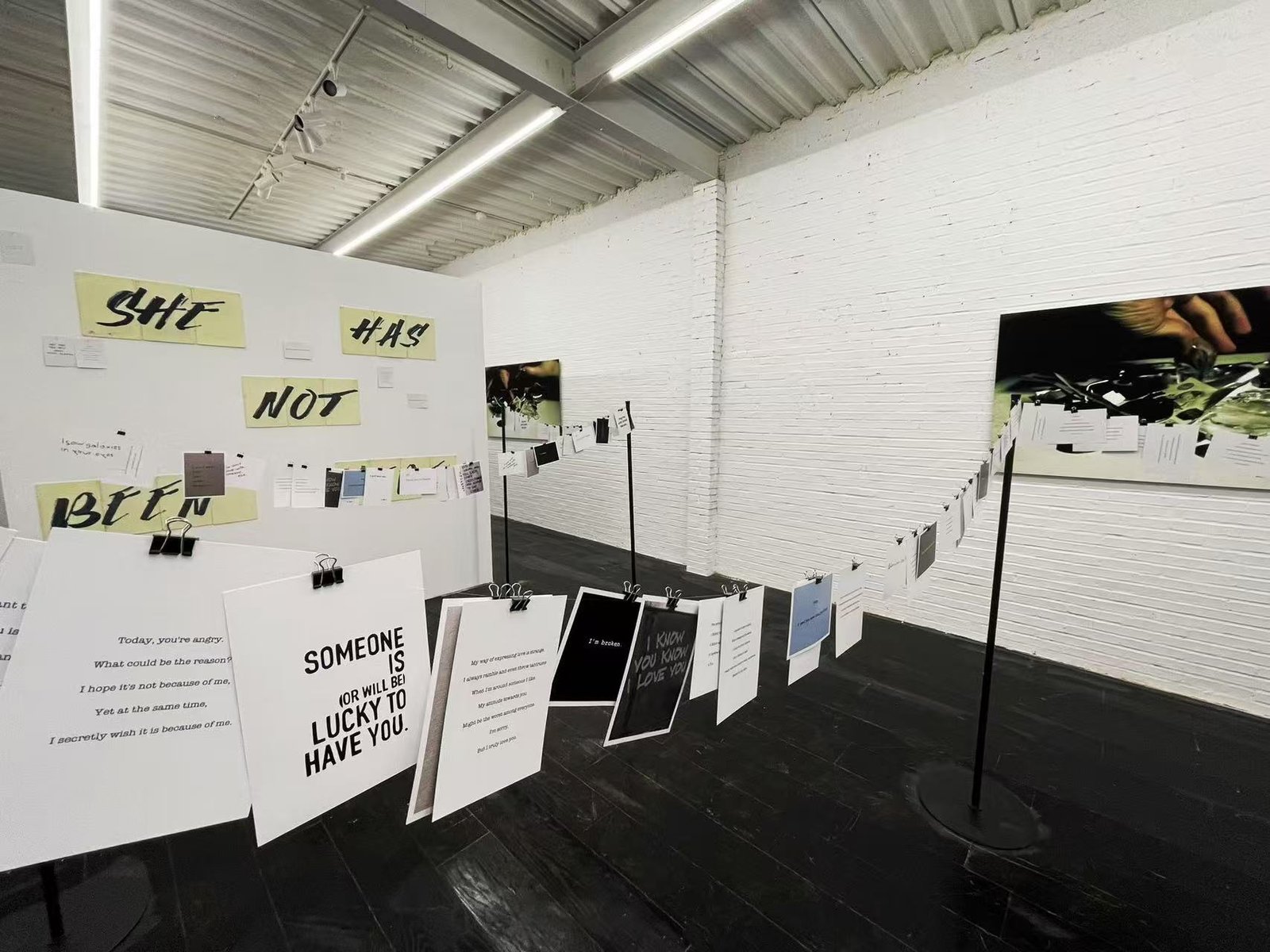
At the heart of her practice lies a broader critique of image-making systems and their underlying power structures. By repurposing a device meant for archiving into one that distorts, obscures, and resists, Yu challenges the visual logic of surveillance and data capture. Her scanner becomes a counter-archival tool—recording not facts, but felt experiences. The body in her work is not the object of vision but the medium through which vision is undone. This inversion reorients the viewer, asking them not what they see, but what they sense, what remains, and what escapes recognition. The fragility of each scan does not imply vulnerability alone—it signals a refusal to conform to systems that privilege clarity, visibility, and control.
Yu deliberately resists identifying her work with fixed cultural or political categories. While her practice is undeniably shaped by experiences of gender, migration, and cultural dislocation, she avoids direct labeling. There are no overt symbols of identity in her works, yet every pixel is charged with questions of intimacy, marginality, and bodily memory. Her refusal to be framed through conventional identity politics opens her practice to a broader spectrum of interpretation and invites deeper emotional engagement. This ambiguity is not evasive—it is strategic. By withholding didactic explanations, Yu allows her audience to engage with her work through their own sense of closeness, discomfort, or curiosity.
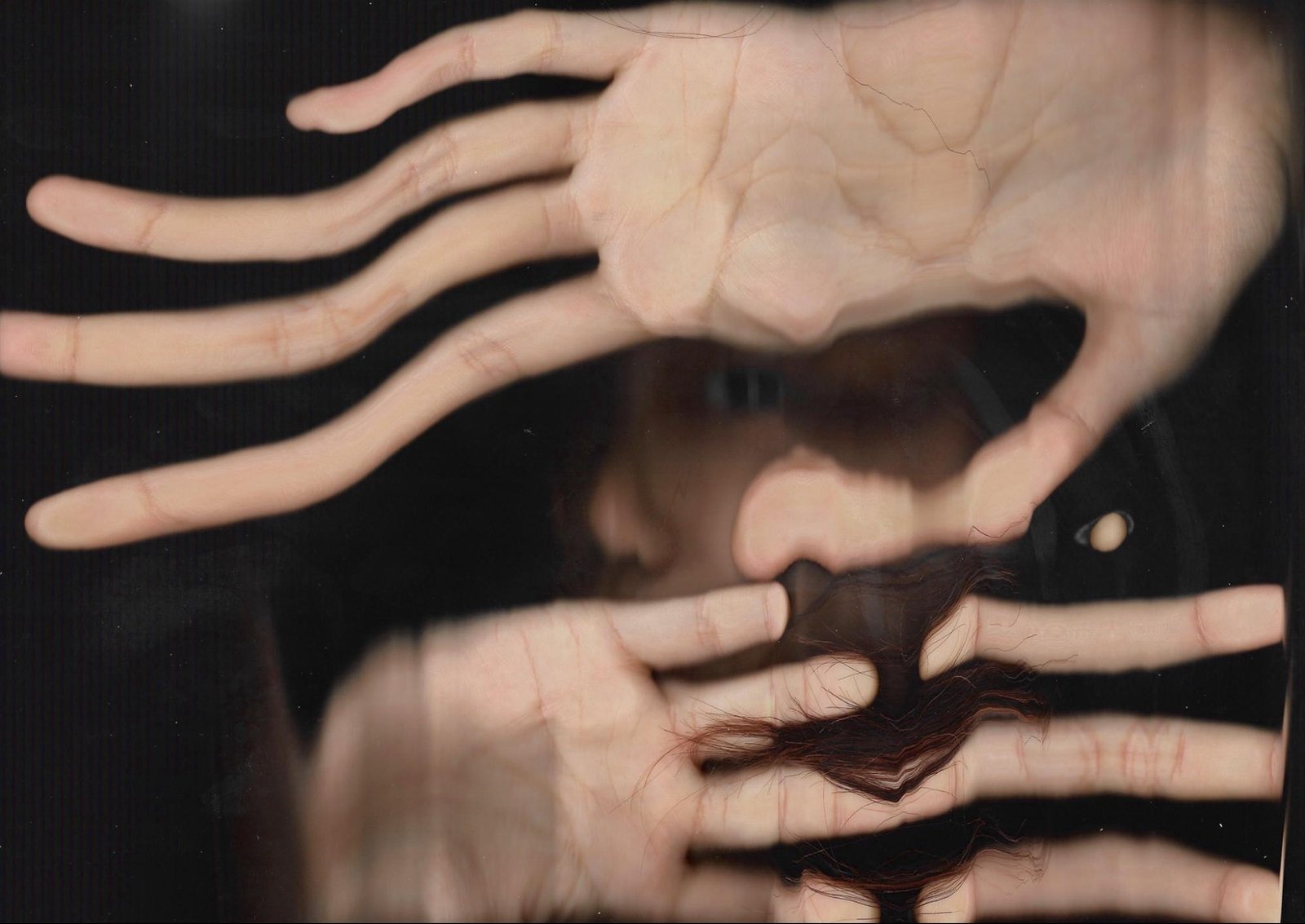
This nuanced positioning aligns Yu’s work with ongoing conversations in post-photography, new materialism, and queer visual theory. Her process of misusing and recontextualizing low-tech tools challenges the spectacle-driven logic of contemporary digital aesthetics. Rather than offering images that are sleek, instant, and optimized, she offers those that are slow, raw, and resistant. In this space, softness becomes defiance, and the blur becomes a boundary against surveillance and simplification.
Operating in the UK has been essential to Jiayi Yu’s artistic evolution. The UK’s vibrant critical arts ecosystem—spanning conceptual research, interdisciplinary collaboration, and experimental media—has provided a uniquely fertile ground for her development. Institutions like Somerset House Studios, Auto Italia, and The Photographers’ Gallery have not only validated her approach but have actively shaped a context where her method of working outside the traditional image economy is both encouraged and supported. Her education at RCA and LCC offered her access to a rigorous academic framework and a peer network where artistic risk, ambiguity, and process-based work are embraced.
Additionally, the UK’s cultural infrastructure, including Arts Council England and initiatives like New Contemporaries, supports artists whose work challenges dominant forms and narratives. Jiayi’s refusal to deliver easily legible or commodifiable content has found a receptive audience in the UK’s art world, where criticality and experimentation are seen as strengths. Here, her strategy of softness—rooted in fragility, process, and disruption—is not misread as weakness but understood as an intentional, radical choice. The UK is not only where she creates; it is where her voice as an artist is fully heard.

While her work embraces intimacy and abstraction, it is not free from critique. Yu is fully aware of the risks embedded in her methodology. There is a delicate tension between affect and analysis, between the poetic and the political. Her ongoing challenge lies in ensuring that her use of ambiguity and sensuality does not slide into mere aestheticization. This is why she continues to expand her practice, incorporating installation, sound, and spatial design, seeking to create environments where the act of sensing becomes immersive, embodied, and critical. Her future work aims to interrogate not only the emotional consequences of touch, but the politics of who gets to touch, whose bodies are registered, and which sensory modes are privileged or erased.
Touch Me, then, is more than a series—it is a statement of intent. It embodies a methodology of resistance through softness, a poetics of slowness in an age of speed, and a form of non-verbal critique in an image-saturated world. Jiayi Yu’s scanner is not just a piece of hardware; it is a conceptual weapon—a membrane where visibility dissolves, where the body imprints without revealing, and where memory flickers between presence and disappearance. Through this quiet but radical act of scanning, she asserts that not all resistance needs to be loud. Some of it lives in the blur, in the hesitation, in the fragile insistence to still be felt.
Published by Joseph T.