By: Raymond Perry
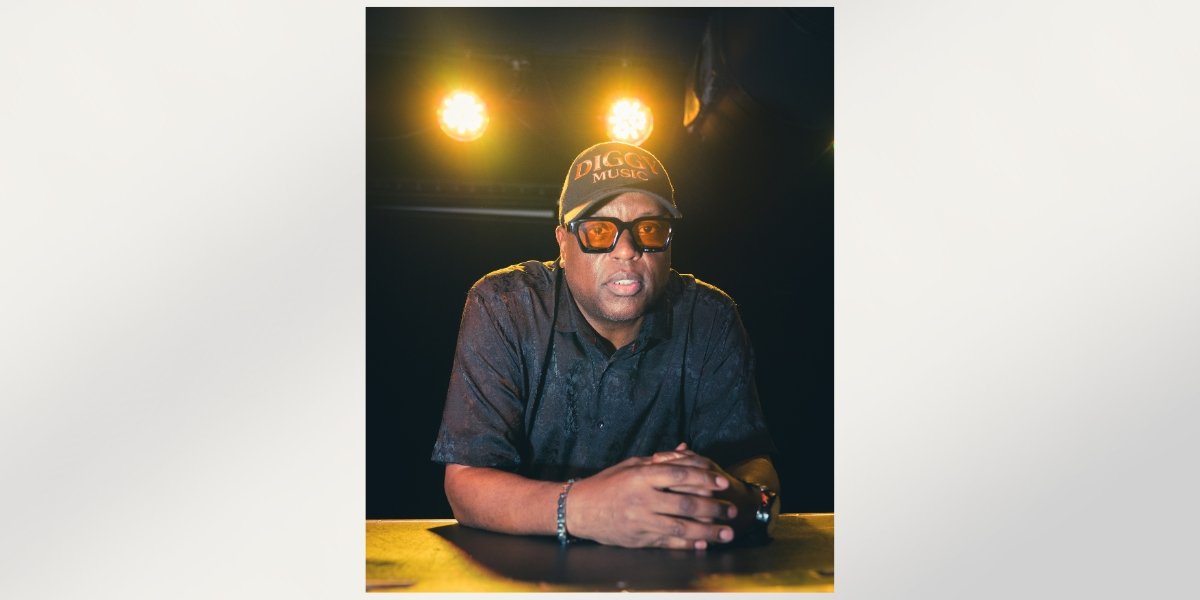
For Rob Diggy, composing is not just technical—it’s ancestral.
Black music has long been rooted in emotion, survival, and sacred storytelling. From the fields to the church house, from vinyl crackle to streaming platforms, it has carried the weight of history and the pulse of resilience. For Diggy, that lineage isn’t something he studies from afar—it lives inside his creative process.
“Black music has always come from emotion, history, and survival,” he says. “And that still shapes how I compose today.”
As an African American composer, Diggy instinctively pulls from sounds that trace back to Africa—especially rhythm and percussion.
“I start with emotion first,” he explains. “Because the music has to feel real before anything else.”
For him, scoring isn’t about background filler. It’s about emotional architecture. It’s about telling the story through vibration.
“Some of the tones and grooves I use are meant to move people not just mentally, but in their spirit too,” he says. “Almost like it activates our chakras and energy.”
In his world, music is not decoration. It is activation.
The Sounds That Raised Him
Diggy’s foundation was built at home—surrounded by gospel, soul, hip-hop, and R&B.
“That’s the music that was always playing in our house growing up,” he says. “Those sounds stayed with me.”
That early exposure shaped not just his taste, but his musical DNA. Even now, when he composes for film and television, he embeds subtle motifs and textures from those genres into his scores.
“I still pull from that feeling,” he says. “It helps me keep the music rooted in something real while still making it cinematic.”
There’s a spiritual throughline between the call-and-response of gospel choirs, the storytelling of soul, the rhythm of hip-hop, and the vulnerability of R&B. Diggy understands that these aren’t just genres—they are generational archives.
Translating Black Experience Into Sound
When asked how he translates lived Black experiences—joy, struggle, resilience—into melody and rhythm, Diggy’s answer returns to authenticity.
“In an industry driven by trends and algorithms, I protect authenticity by starting with feeling first, not formulas,” he says.
He avoids composing based on what’s trending. Instead, he leans into emotional truth.
“My foundation comes from gospel, soul, hip-hop, and R&B,” he explains. “So when I compose, I lean into that emotional truth instead of chasing what’s popular.”
He also draws from African rhythm and storytelling traditions, recognizing them as part of the larger musical inheritance.
“That’s part of our musical DNA,” he says.
Even when scoring for commercial projects, his intention remains consistent.
“My goal is to make sure the music still sounds human, soulful, and honest.”
Because while trends shift, emotion remains timeless.
“Trends change,” he says. “But real emotion doesn’t.”
Preserving the Legacy, Teaching the Future
Diggy feels a deep responsibility—not just to create, but to preserve and elevate.
“I feel a real responsibility to preserve, elevate, and evolve Black music,” he says.
Part of that responsibility includes mentorship—especially reaching young people who may not yet see themselves as musicians.
“Especially the ones who don’t play yet,” he adds. “This music belongs to them too.”
He is intentional about teaching the next generation how to pick up an instrument and find their own voice. For Diggy, legacy is not passive—it is active.
He also strives to make sure that the names of trailblazers are never forgotten.
“I make it a point to keep the names of the greats alive,” he says. “The ones who opened doors and made a way.”
For him, honoring Black history in music means acknowledging those who built the foundation—while building something new on top of it.
“It’s not just about creating new music,” he explains. “It’s about passing down the history, the spirit, and the game so the next generation can take it even further.”
Connection Is the Core
On a deeper level, Diggy’s work is about connection.
“Everything I create is about honoring where we come from while pushing the sound forward,” he says.
He understands that innovation does not require erasure. Evolution does not mean abandoning roots.
If the music carries truth, feeling, and purpose, he believes it will likely reach the people it is meant to reach.
“My goal is to leave something the next generation can build on,” he says. “Just like I was able to build on what was passed down to me.”
In that way, Rob Diggy is more than a composer. He is a cultural bridge—linking past to present, tradition to innovation, history to possibility.
Through rhythm, harmony, and soul, he reminds us that Black music is not just entertainment.
It is an inheritance. It is resilience. It is history set to sound.
For press requests, submit inquiries to publicist Desirae L. Benson.