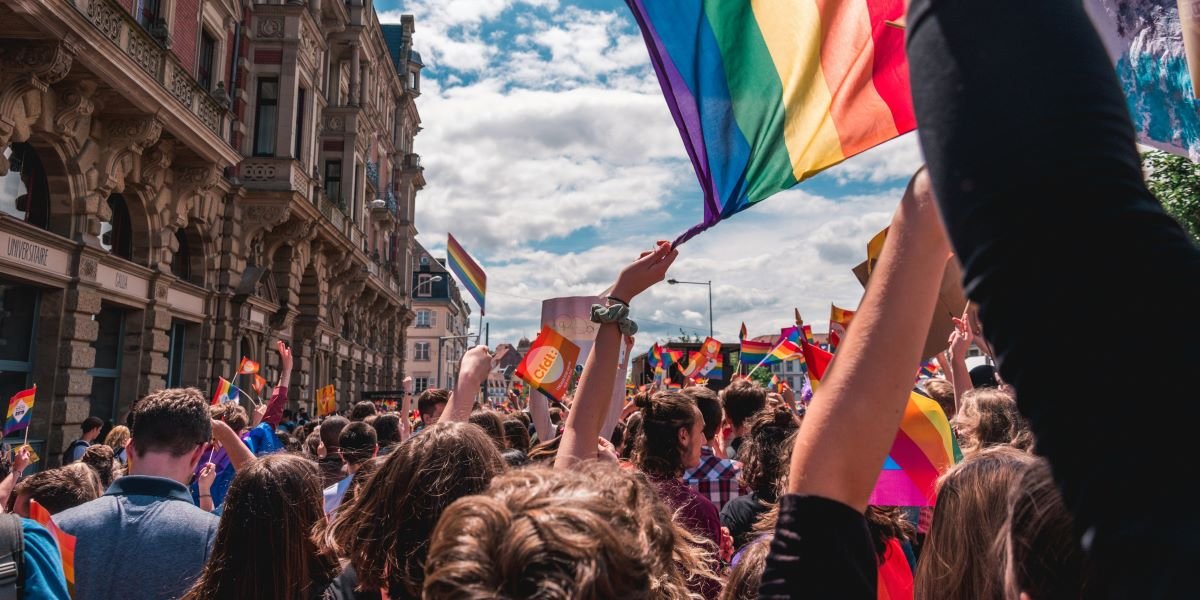
Governor Kathy Hochul moved on two fronts as June began, pairing a symbolic kickoff to LGBTQ+ Pride Month with a concrete piece of upstate economic development. She issued a proclamation designating June 2026 as LGBTQ+ Pride Month and directed state office buildings and landmarks to be illuminated in Pride colors on June 1. The same stretch brought a separate announcement with a longer financial tail: a $6 million state commitment that secures a lease extension keeping the Binghamton Rumble Ponies at Mirabito Stadium.
Taken together, the two actions illustrate how a governor’s calendar works in early summer — one gesture aimed at the cultural moment, the other at the kind of district-level spending that rarely makes statewide headlines but shapes a city’s economy for years.
Pride Month Across the Five Boroughs and Beyond
The Pride proclamation lands as New York City enters its most concentrated stretch of LGBTQ+ programming. The illumination of state landmarks in Pride colors is a familiar annual ritual, but it carries added weight this year as the season opens against a more strained financial backdrop for some of its signature events.
The nonprofit behind the NYC Pride March has said it is roughly half a million dollars short of its event budget after losing funding from several major corporate sponsors, a gap reported by Gothamist as Pride programming got underway. The state’s symbolic support does not close that shortfall — the proclamation and lighting are gestures rather than grants — but the timing underscores a widening divide between public-sector endorsement and the private dollars that actually underwrite large-scale celebrations. The NYC Pride March is scheduled for June 28, traveling past the Stonewall Inn, the site of the 1969 uprising that anchors the month’s history.
A $6 Million Bet on Minor League Baseball
The Rumble Ponies announcement is the more tangible of the two. The Binghamton Rumble Ponies have extended their lease at Mirabito Stadium, keeping the Double-A team in Binghamton through at least the 2035 season, a deal made possible by $6 million in state funding included in the recently passed FY27 New York State budget.
“For more than 30 years, residents and visitors alike have cheered on Binghamton’s baseball team,” Hochul said, framing the upgrades as a way to keep the franchise playing locally while giving players, coaches, and staff a modernized facility. The state money is not arriving alone. Up to $6 million in state funding will be combined with $1.2 million in city and team investments, alongside $10 million in planned city and federal spending for surrounding stadium-district enhancements.
The renovation list is substantial. Planned work includes a new playing field and dugouts, a press box and technology update, upgraded concessions, a new gift shop, accessibility improvements, and HVAC and electrical work. Binghamton Mayor Jared Kraham, whose city committed its own funds, framed the stakes in compliance terms. He called the state money an unprecedented investment in the future of professional baseball in Binghamton, saying the upgrades will keep the ballpark in line with Major League Baseball standards and keep its gates open for the families who attend each year.
Why a Ballpark Lease Counts as Policy
The MLB-standards language is not incidental. Major League Baseball’s takeover of minor league affiliation in recent years brought facility requirements that older ballparks must meet to retain their teams, putting smaller markets under pressure to invest or risk losing a franchise. Public funding for a Double-A stadium, viewed through that lens, becomes a defensive economic move as much as a sporting one.
The team is owned by Diamond Baseball Holdings, and the city-owned ballpark on Henry Street first opened in April 1992, when the Binghamton Mets played their inaugural game there. The franchise rebranded as the Rumble Ponies beginning with the 2017 season. For a city the size of Binghamton, the tens of thousands of visitors a season the team draws represent meaningful foot traffic for surrounding businesses, which is the logic the stadium-district investments are built on.
Two Announcements, One Governing Pattern
The juxtaposition is instructive. The Pride proclamation costs the state little and signals values to a metropolitan base; the Binghamton commitment spends real budget dollars to protect an upstate asset. Both are routine in their way, yet together they sketch the breadth of demands on a statewide office — cultural recognition in the five boroughs and infrastructure preservation in the Southern Tier, handled in the same news cycle.
For New York City readers, the throughline is the calendar itself. June opens with the symbolic machinery of Pride and the practical machinery of the budget operating in parallel, a reminder that the state’s attention is split across regions whose needs rarely overlap. The lighting will fade with the month. The ballpark deal runs for nearly a decade.