For decades, actors depended on Hollywood to decide how audiences would see them.
The studio chose the script. The casting director chose the actor. The production company shaped the image. For performers who rarely saw themselves reflected in leading roles, the only option was to wait for the industry to imagine something different.
Rohan Gurram does not want to wait.
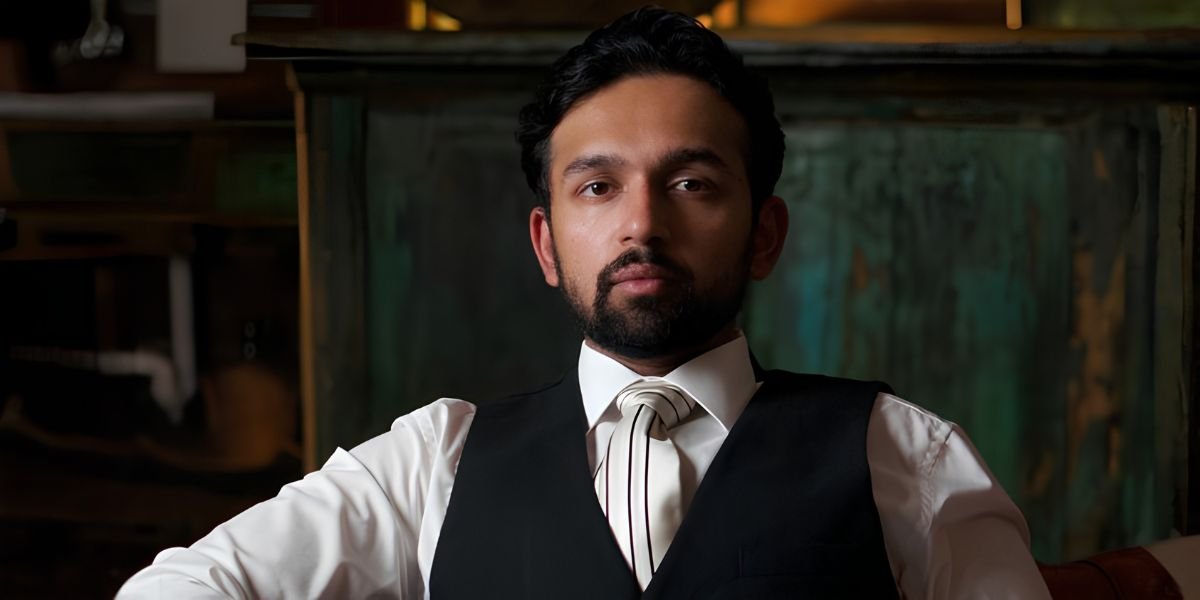
As he begins pursuing acting and film, Gurram is also building the kind of character he believes American entertainment has rarely created: an Indian American man presented with power, style, romance, contradiction, and cinematic weight.
“There are roles I want to play that have not really been written for people who look like me,” Gurram said. “Instead of waiting for someone else to see it, I want to start showing what it could be.”
Indian American men have become more visible across American film and television, but visibility has not always produced range. Many characters still fall within familiar categories: the intelligent professional, the awkward friend, the comic relief, the dependable colleague, or the culturally conflicted son.
Those characters may be successful or likable. They are less often designed to carry power, mystery, desire, danger, or myth.
That is the territory Gurram wants to enter.
He is not trying to copy characters such as James Bond, Bruce Wayne, Michael Corleone, or Thomas Shelby. He is interested in why those figures became culturally significant. Their appeal comes from more than plot. Wardrobe, music, architecture, silence, relationships, and consequence all contribute to the way audiences experience them.
They exist inside fully developed worlds.
Gurram believes Indian American men have rarely been framed with that same level of intention. They are often allowed to participate in the story without defining its emotional center.
His response is to begin building the world himself.
Through RG, Gurram is developing cinematic projects that use recurring characters, cities, tailored clothing, music, and carefully chosen environments to explore ambition and identity. The work will place him in scenes rather than limiting him to direct-to-camera content.
Some projects will follow fictional or semi-fictional narratives. Others will blur documentary, performance, and real life. Together, they are intended to establish a visual language around the kind of Indian American leading man Gurram wants to portray.
The approach reflects a major shift in how acting careers can be built.
Performers can now produce scenes, short films, and original series without waiting for a studio. They can release the work directly, study how audiences respond, and develop proof around characters the traditional industry may not yet understand.
For Gurram, that independence does not replace the need for training or strong collaborators. He plans to develop the craft seriously and work with filmmakers, writers, actors, and production teams who can make the work better.
What changes is who gets to begin the process.
“The goal is not to avoid Hollywood,” Gurram said. “The goal is to arrive with a body of work, a point of view, and an audience already behind the idea.”
His broader background also shapes the role he is building.
Gurram has worked across entrepreneurship, music, creator culture, and talent management. He moves between business and entertainment, educational content and cinematic storytelling. That combination gives him a reference point that does not fit neatly within the characters Indian American men have traditionally been offered.
He wants to portray a man who can move between a boardroom and a recording studio without either environment feeling borrowed. Someone who understands ambition, family, loyalty, style, culture, and consequence. Someone who can be admired in one scene and questioned in the next.
The character does not need to be perfect. Gurram is more interested in complexity.
Some of the most enduring figures in film are memorable because their strength exists beside flaws, private fears, difficult choices, and moral tension. Indian American performers deserve access to that same emotional range.
Gurram believes changing representation will require more than asking established studios to write better parts. New actors, filmmakers, and creators will need to develop characters independently and give audiences a chance to see them before the industry decides whether they are commercially safe.
That is what he intends to do.
He is beginning with scenes, films, and a recognizable visual world. Over time, he hopes that work leads to larger roles and original productions built around Indian American characters who are central rather than supporting.
Hollywood may eventually cast the role.
Gurram plans to make sure it already exists when it does.
To learn more about Rohan Gurram, visit www.rohangurram.com.