
The pharmaceutical industry faces a hard problem. Demand for effective cancer treatments keeps rising, and so does the need for options that patients in lower-income countries can actually afford. Dr. Kanans Visvanats, Founder of Zoar Limited, works at that intersection through a research approach built on scientific rigor and practical constraints. He has co-authored and filed 15 patents spanning oncology, anti-malarial therapeutics, transdermal delivery systems, and plant-derived formulations.
The Philosophy Behind Natural Extract-Based Therapeutics
Dr. Visvanath’s research strategy centers on targeted, natural extract-based therapeutics. That focus is a deliberate departure from conventional pharmaceutical development pathways, and it reflects a commitment to solutions that are scientifically sound and economically viable at scale.
Natural extracts have been used in traditional medicine systems for thousands of years, and modern science increasingly recognizes the therapeutic potential of these compounds. Dr. Visvanats’s work builds on that foundation while applying contemporary research methods and rigorous scientific standards to identify, purify, and optimize natural compounds with anti-cancer and anti-malarial properties.
Working from natural extracts brings practical advantages. Many of these compounds have long records of human use, and the raw material can often be sourced and processed at a cost that suits markets where patients pay for medicine out of pocket. Cost structure shapes which treatments ever reach a pharmacy shelf in those countries. That reality sits behind decisions made at the research stage, long before a product reaches registration.
Developing Treatments for Emerging Markets
A distinguishing feature of Dr. Visvanats’s research is its explicit focus on the needs of emerging markets. Rather than developing treatments primarily for wealthy nations with well-funded healthcare systems, his work is designed around the constraints of developing economies from the outset.
Designing for these markets means understanding the economics, logistics, and regulatory requirements that govern how a medicine reaches a patient. The work extends past the laboratory into manufacturing processes, supply chain management, and distribution. Registration timelines differ from country to country, cold chain infrastructure is uneven, and unit cost decisions made during process development carry through to the price a patient eventually pays. Dr. Visvanats’s research treats those constraints as design inputs rather than afterthoughts.
What the Patent Portfolio Covers
The portfolio reflects years of laboratory work, from identifying candidate compounds and establishing their properties to turning a bench result into a process that runs at commercial scale. Several filings cover synthesis and preparation processes rather than the molecules themselves, which is where much of the cost reduction in generic oncology manufacturing happens.
These filings cover a range of therapeutic applications and show the breadth of Dr. Visvanats’s contributions to pharmaceutical science. The oncology filings address several aspects of cancer treatment, while the anti-malarial work contributes to the response to a disease that still affects millions of people across developing regions.
Filing in more than one jurisdiction also matters commercially. It lays the groundwork for developing and distributing these treatments in multiple markets rather than a single national one, which is often the difference between a promising result and a medicine that actually gets manufactured.
Why Tolerability Matters in Emerging Markets
Tolerability is a stated priority across Dr. Visvanats’s research programs. That priority reflects a practical reality. Patients in emerging markets often have limited access to the supportive care and monitoring that help manage side effects from more aggressive treatment.
In oncology, tolerability influences whether a patient completes a course of treatment at all, a question clinicians weigh alongside cost and availability. Research aimed at that question tends to work on formulation, delivery route, and dosing rather than on the active molecule alone.
Where the Research Goes Next
The work of Dr. Visvanats and Zoar Limited continues to evolve. The existing filings are achievements in their own right, but they also function as building blocks. Each one opens further research directions, additional applications, and new questions worth pursuing.
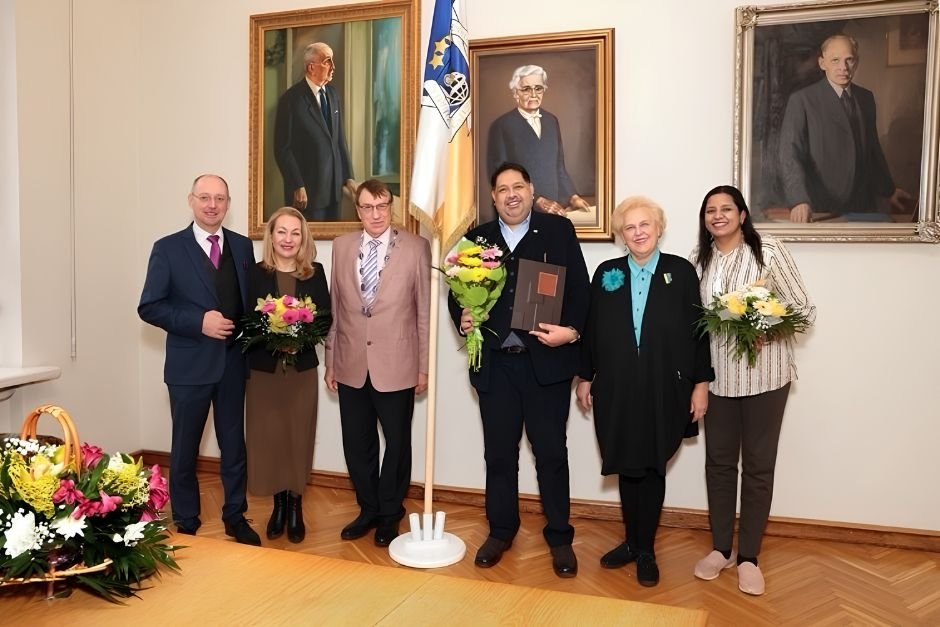
This recognition from the Latvian Academy of Sciences validates the importance and impact of this patent portfolio and the research program behind it. It affirms that the scientific community recognizes the value of Dr. Visvanat’s innovative approach to pharmaceutical development and his commitment to developing treatments that serve underserved populations.
The conviction behind the work is that life-saving medicine should be a basic entitlement rather than a luxury. That principle is what connects the patent filings, the manufacturing focus, and the emphasis on markets that larger developers often skip.
Further detail on Dr. Visvanats’s research and patent filings is available on his professional website.