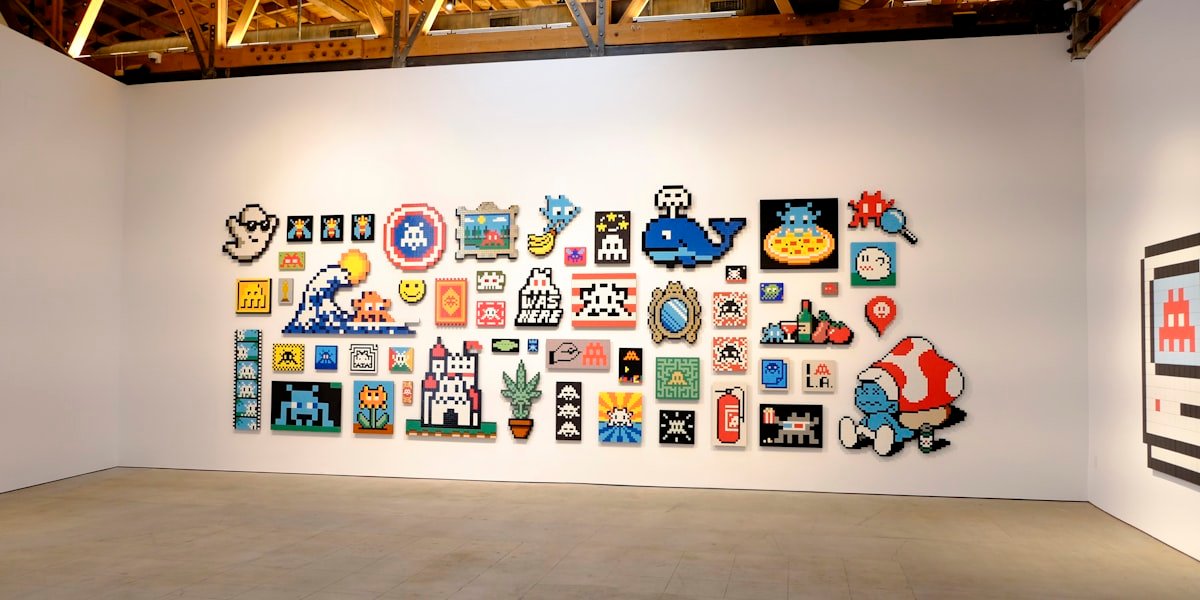
Francisco Correa Cordero, founder of the downtown gallery Lubov, died on August 2 at a hospital in Manhattan. He was 37. The gallery announced his death the next day on Instagram, giving no cause but saying he passed “peacefully surrounded by what he loved most – his chosen family, laughter, and so much love.”
Key Takeaways
- Francisco Correa Cordero, founder of New York’s Lubov Gallery, died August 2 at a Manhattan hospital at age 37.
- The gallery announced his death via Instagram on August 3, giving no cause of death.
- Cordero opened Lubov in 2016 in Tribeca and relocated it to a fourth-floor walk-up in Chinatown in 2019.
- He worked as Executive Coordinator at Independent Curators International from 2015 to 2022 while running the gallery.
- The gallery’s Instagram announcement drew more than 820 comments from artists, curators, and critics including Jerry Saltz.
The loss lands hard in a New York art world that had watched Lubov grow from a scrappy Tribeca walk-up into a fixture of the city’s gallery circuit, and it underscores how much of that scene’s texture depends on a handful of independent dealers willing to bet on artists nobody else would show yet. Cordero was one of those dealers, and his death has triggered a wave of public mourning that says as much about how the gallery operated as it does about the man himself.
What Happened and When
The gallery’s Instagram statement confirmed Cordero died Sunday, August 2, and that the news went public the following day, August 3. No hospital name or cause of death has been released, and none of the reporting on his passing has filled that gap.
Lubov had just marked its tenth anniversary as a business. Cordero opened it in 2016 in a second-floor space at 373 Broadway in Tribeca, a stretch of the neighborhood that had not yet turned into the gallery-dense corridor it is now. The debut show featured Chicago-based painter Boris Ostrerov, known for heavily built-up abstract canvases, giving the gallery its identity as a launchpad for artists who hadn’t yet found a commercial home.
Who Feels This Loss Most
The immediate impact falls on the artists whose careers Cordero helped shape and on the small staff and community around Lubov. Mira Dayal, who got her first solo show there, told a colleague she sought Cordero out because “he was one of the few people supporting labor-intensive, site-specific, and commercially irreverent work, and he was also kind and curious.” That kind of program, run without a fixed roster or sales-first mandate, depends heavily on the person running it, which is part of why his death raises real questions about what happens to the gallery’s identity going forward.

Painter Kevin Tobin, who had two solo exhibitions at Lubov, emphasized Cordero’s distinctive character and presence. Tobin noted that Cordero possessed a magnetic quality and was truly singular in his approach. The gallery’s own statement framed his life’s work in similar terms, saying he built “a safe and meaningful community for artists” that “will be felt through the art community forever,” a claim that reads less like marketing copy and more like an attempt to explain why so many people are grieving publicly.
How Cordero Built Lubov From the Ground Up
Cordero was born July 14, 1989, and raised in Mexico before relocating to New York in 2007 to study photography. Before founding his own gallery, he worked across a run of respected institutions, including Yancey Richardson Gallery, Martos Gallery, Aperture Foundation, Humble Arts Foundation, and the Richard Avedon Foundation, the kind of resume that gave him an insider’s eye without an insider’s money.
From 2015 through 2022, he held a day job as Executive Coordinator at Independent Curators International, work that effectively subsidized Lubov in its early years. ICI remembered him as one of its hardest-working staffers, “fueled by passion and endless excitement at the prospect of making the impossible possible,” and recalled that a red Husky toolbag sat stashed beneath his workstation, ready for him to dash over to Lubov during lunch to patch or install whatever needed attention. That detail matters because it shows Lubov wasn’t bankrolled by outside capital. It was built on unpaid labor squeezed into lunch hours.
He named the gallery after his first wife, Lviv-born artist Luba Drozd, whose name translates to “love” in Russian, and he later gave her a show there himself, in 2023. After outgrowing the original Tribeca space, the gallery moved in 2019 to a walk-up on the fourth floor of a building in Chinatown, a shift that let Cordero keep rents manageable while he expanded the kind of experimental, non-commercial programming, including video, performance, and installation work, that a bigger space or a market-driven landlord might not have tolerated.

Why the Gallery’s Roster Reads Like a Who’s Who of Downtown Experimentation
Over ten years, Lubov’s exhibition list grew to include Mira Dayal, Shannon Cartier Lucy, Parker Ito, Bryce Kroll, Xingzi Gu, Tariku Shiferaw, Jon Rafman, Lilia Ana, and the Los Angeles-based performance group My Barbarian, whose members Malik Gaines, Jade Gordon, and Alexandro Segades appeared in the Whitney Biennial in 2022. Cordero paired Rafman and Ito in a two-person show titled “Poets, Gamblers, Fools” that pushed back on the term “post-internet” at a moment when that label was becoming a shorthand critics used loosely.
Lubov also showed up on the fair circuit, appearing at NADA Miami, Independent New York, and Frieze New York, giving artists without gallery representation elsewhere a route into those rooms. Cordero served on NADA’s membership and programming committee, sat on the board of KAJE, a nonprofit exhibition space in Brooklyn, and joined the advisory board of Carriage House, another nonprofit venue. Writing on the Critic’s Page in the Brooklyn Rail he explained what drew him to certain artists: “It’s the work that produces a sensation that I haven’t felt before; usually somewhere between pleasure, discomfort, and curiosity, but that is difficult to identify and get rid of. I want to see work that brings to the surface a part of myself that I haven’t seen before, and it is my hope that others experience something similar.” That statement doubles as a mission for a gallery that never had one written down.
What the Tributes Reveal About Lubov’s Place in the Art World
The Instagram announcement drew more than 820 comments, a volume that points to how far Cordero’s reach extended beyond a single Chinatown walk-up. Critic Jerry Saltz reposted the statement and wrote, “I liked him, I was interested in his eye,” a short line that carries weight given Saltz’s public profile and the plainness of the compliment. Los Angeles curator Paul Schimmel called it “a heartbreaker, a real loss,” and gallerist Sophie Mörner described Cordero as a “brilliant soul.”
His partner and Lubov’s gallery director, Kristen Wasik, posted on August 3, “You created a safe haven for the misfits of the world.” That line, paired with the volume of tributes from curators, artists, and colleagues at ICI, suggests the gallery’s identity was inseparable from Cordero’s personality rather than a business model that can simply be handed off. Cordero also wrote about identity and displacement in the Brooklyn Rail, describing his reaction to a New York tradition: “I cried the first time I saw the Lunar New Year parade. I still do and I cannot explain it, or articulate the feeling. I, too, know what it’s like to hold on to a small piece of identity when you’re so far from home.” That personal reflection, tied to the neighborhood where he eventually relocated Lubov, links his own story of arriving in New York from Mexico in 2007 to the community he built around the gallery two decades later.
No date has been set for a celebration of life. What remains unresolved is whether Lubov continues under Wasik or another member of its circle, and whether the artists who built careers through Cordero’s eye for “commercially irreverent work” find a comparable home elsewhere in a market that rarely rewards that kind of patience. Voyage New York will note any update on the gallery’s future if one becomes public. For now, the tributes stacking up across Instagram stand as the clearest record of what a decade of unglamorous, lunch-break-fueled gallery work actually built.
FAQs
What Was Lubov Gallery Known For?
Lubov was known for showing commercially irreverent, labor-intensive, and site-specific work by emerging artists, along with installation, video, and performance pieces that did not always fit a traditional sales model. It also hosted unusual public events, including a forty-eight-hour haircutting marathon staged by artists.
Where Was Lubov Gallery Located?
Lubov opened in 2016 on the second floor of 373 Broadway in Tribeca. In 2019 it moved to a fourth-floor walk-up space in Chinatown, where it remained at the time of Francisco Correa Cordero’s death.
Who Did Francisco Correa Cordero Work for Before Founding Lubov?
Before opening his own gallery, Cordero worked at Yancey Richardson Gallery, Martos Gallery, Aperture Foundation, Humble Arts Foundation, and the Richard Avedon Foundation. He also served as Executive Coordinator at Independent Curators International from 2015 to 2022.
Where Did the Name Lubov Come From?
Cordero named the gallery after his first wife, artist Luba Drozd, who was born in Lviv. Her given name, Lubov, means “love” in Russian.
Which Artists Showed at Lubov Gallery?
Artists exhibited at Lubov included Mira Dayal, Shannon Cartier Lucy, Parker Ito, Bryce Kroll, Xingzi Gu, Tariku Shiferaw, Luba Drozd, Jon Rafman, Lilia Ana, and the performance group My Barbarian.
Has a Cause of Death Been Announced for Francisco Correa Cordero?
No. The gallery’s Instagram statement did not list a cause of death, only saying he passed peacefully surrounded by his chosen family.
Will There Be a Memorial for Francisco Correa Cordero?
A celebration of life has been mentioned but no date has been announced publicly as of the gallery’s statement.