For most people, translating a book is a literary project. For Isabella Skrypczak, it became eight years of channeling, breaking down, releasing, and rebuilding. The book is her grandmother’s wartime memoir, written in Polish and recounting her exile to Siberia at six. The English translation, A Polish Girl in Siberia: Surviving and Transcending Exile, was published by Disruption Books and has been compared to Anne Frank’s The Diary of a Young Girl. Kirkus Reviews called it “a testament to the resilience of the human spirit.” Barbara Kirshenblatt-Gimblett of the POLIN Museum of the History of Polish Jews called it “an inspiring story of resilience against all odds.”
Isabella, who goes by Iza, did not set out to spend nearly a decade on a single translation. She had a career in HR at a major tech company, a young daughter named Kamila, and a life that looked complete from the outside. The translation began as an act of love. It blossomed into something she never imagined possible.
The WWII Memoir Her Family Kept In Polish For Years (And Why Isabella Couldn’t Stop Thinking About It)
The story she was translating was not abstract. It was hers.
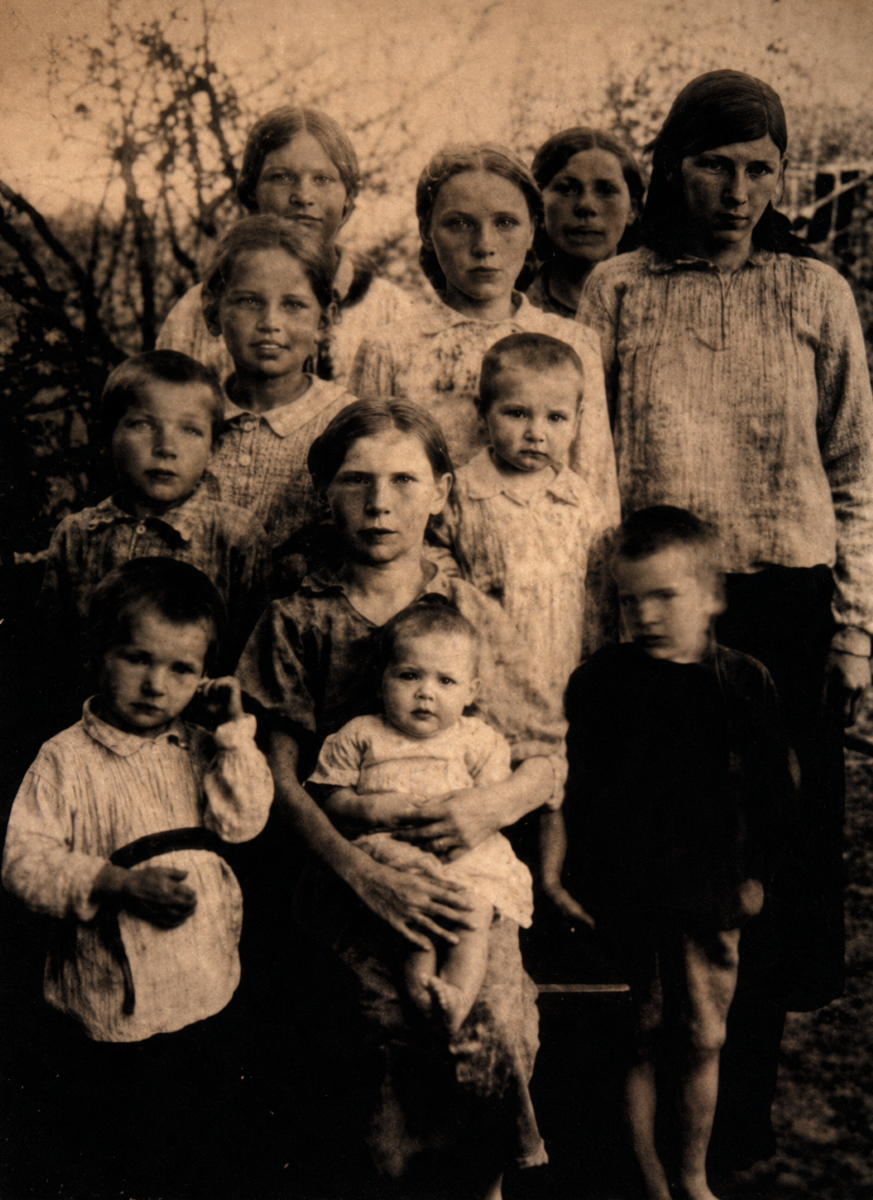
In April 1940, Iza’s grandmother, her babcia, Ida Kinalska-Pietruska, was six years old when Soviet soldiers pounded on her family’s door before dawn. Within hours, she and her mother were forced onto a cattle car bound for Siberia. Her father was imprisoned separately. Ida spent years foraging for food in subhuman conditions, surviving typhoid fever, watching young friends die, and adapting to political shifts that decided whether her family lived or starved.
Ida wrote her own version and published it in Polish in 2011 under the title Syberia: Oczami Dziecka. It received national attention in Poland. For years, it remained inaccessible to English-speaking readers, including Ida’s great-granddaughter Kamila.
Why Translating One Book Took Isabella Skrypczak 8 Years (And Broke Her Open In The Process)
The translation began as a literary exercise. It did not stay that way for long.
Every sentence required Iza to channel a moment her grandmother had lived. The frozen body. The tiny, calloused hands from forced labor. The shakes of uncontrolled fevers. The pangs of hunger. The grief of separation from her father. The violation of being kidnapped from home and forbidden to return. Iza describes feeling each sentence land in her DNA, one strand at a time.
That is why the book took eight years. In some chapters, she could only translate in fragments. She had to stop and let the grief move through her body before she could pick the work back up. It was a slow, embodied reckoning with a history she had carried her whole life without knowing.
The One Thing That Surprised Her Most During The Translation (And It Wasn’t The War)
What surfaced was not just her grandmother’s suffering. It was Iza’s own quiet fear of “the other.”
She had spent her life convinced she was open-hearted and tolerant. The translation forced her to admit she had been carrying inherited rage and distrust toward entire groups of people, passed down through generations she never met. As she puts it: “How many of us speak about tolerance and love for others, yet haven’t done the inner work of feeling the unprocessed ancestral pain we still carry?”
The deeper she went, the more humane she became. Her grandmother had survived Siberia because of strangers who were themselves starving, sick, and forced to work, who kept giving anyway. The people who saved Ida did not share her labels, religion, nationality, or language. They chose to remain human in a place designed to strip humanity from them.
The Text From a Ukrainian Refugee That Stopped Isabella Cold
The translation was never just personal. Many decades after WWII, as Russia’s invasion of Ukraine sent millions of refugees across the Polish border, the patterns Iza had been working to release were repeating in real time. Babcia Ida, by then in her eighties, opened her home and hosted an eight-year-old Ukrainian girl named Kira. Watching her grandmother care for a child living through the same displacement she had survived eighty years earlier collapsed the distance between past and present.
The same Kira would, years later, text Iza directly, around the time the book was published, with a sentence Iza could not move past: “Yes, there are bombs in the neighborhood, but we are fine.” The book had come out, and Lwów, her family’s ancestral hometown in present-day Ukraine, had been bombed. History repeating itself, once again.
Why Isabella Believes We Must Stop Saying That “War Is An Illusion”
There is a moment Iza wrote about that has stayed with her. After the book was published, she shared her grief about her ancestral hometown being bombed publicly. A response she received was “war is an illusion.” Iza wrote back that war is not an illusion; the reasons behind it are. By denying people’s lived experience, we essentially deny them their humanity. As painful as it was to receive such a comment, it helped her gain a sharper clarity.
That clarity is now woven into how she thinks about carrying a story forward. The wounds never fully disappear. Being in touch with them is what keeps you in touch with your own humanity.

The Lesson Every Family Should Learn From Isabella Skrypczak’s 8-Year Translation Project
Iza now lives in Austin with her daughter Kamila. The lesson she most wants to share is not about herself. It is about what translation taught her about what survives, what gets passed down, and what it means to carry a story forward instead of letting it stay buried. Wounds that go unspoken do not disappear. They move sideways into the next generation. They live in nervous systems and in strange griefs that surface for no clear reason.
For Iza, the answer is not to look away. It is to feel them, name them, and let them move. As she puts it: so we can leave this planet where no child inherits war again.