Longevity has become one of the most overused words in wellness, which makes it easy to miss why the idea has taken hold in the first place. Many women are not chasing longevity because they want to live inside a complicated biohacking routine. They are chasing it because they can feel the cost of living without one.
They want energy that lasts beyond the morning. They want strength that does not disappear when life becomes demanding. They want mobility, clearer skin, steadier moods, better sleep, and a sense that their bodies are being supported rather than managed through force. The language of longevity appeals because it gives women permission to think beyond the next workout, the next dress size, or the next short-term reset.
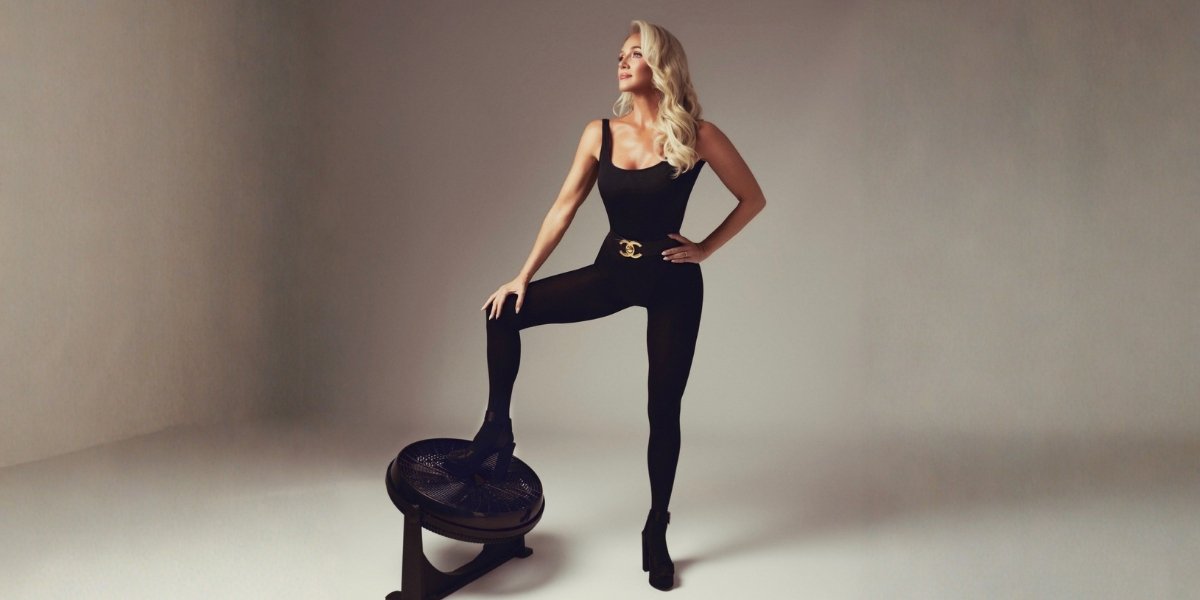
At Romney Studios in New Orleans, Erin Romney has been moving in that direction for years. Her work is grounded in movement, but it has never been limited to one modality. The studio brings together Pilates, strength, yoga, rebounders, BOSU, infrared heated classes, outdoor training, and MVMT by Romney streaming. Now, with the addition of red light therapy, Romney is making a larger point about the future of fitness for women.
Longevity fitness is not about doing more. It is about building a smarter relationship with the body over time.
From Performance to Preservation
Romney’s background gives her a particular lens on this shift. As a former Division I athlete, she understands the satisfaction of performance and the discipline required to train seriously. She also understands that the mindset that works in competitive athletics does not always translate cleanly into a woman’s entire adult life.
The body changes. So does the context surrounding it. A woman who once responded well to intensity may eventually find that the same approach leaves her inflamed, tired, or disconnected from the results she expects. This does not mean she has become less committed. It may mean her training has failed to evolve with her physiology and her life.
That is where the longevity conversation becomes useful. It shifts the question away from how much a woman can endure in a single class and toward what helps her remain capable, confident, and resilient for decades. Red light therapy fits into that conversation because it is commonly discussed alongside recovery-focused practices rather than as another form of exertion. Used responsibly and in context, it speaks to women who no longer want fitness to be measured only by depletion.
Romney’s studio does not treat red light as a replacement for movement. It treats it as a complement to movement, especially when paired with infrared heated classes and a broader method built around variety. That pairing matters because the future of longevity fitness will likely belong to systems, not isolated trends.
Why Women Are Looking for a Different Kind of Fitness Authority
The fitness industry has spent years telling women what to do, often with more confidence than nuance. Lift heavier. Sweat more. Eat cleaner. Stretch longer. Sleep better. Track everything. Do less. Do more. The contradictions are exhausting, especially for women managing hormonal changes, careers, motherhood, injury history, and the natural complexity of aging.
Romney’s authority comes from refusing to flatten that complexity. Her method recognizes that the body is not static. The same woman can need challenge, restoration, strength, softness, structure, and variety depending on the season she is in. That is why a single-format studio can feel limiting, even when the format is excellent. It may answer one need well while leaving the rest of the body’s questions unaddressed.
Red light therapy becomes compelling in this context because it is one more way to expand the conversation beyond the workout itself. The woman who is drawn to red light may care about her skin, but she may also be thinking about soreness, inflammation, energy, joint comfort, and recovery from years of asking her body to keep going. Those needs are not superficial. They are practical.
The deeper story is not that red light is trendy. The deeper story is that women are becoming more sophisticated about what they expect from wellness spaces.
The New Luxury Is Feeling Supported
Luxury in fitness used to be defined by exclusivity, design, location, and the feeling of entering a polished space. Those things still matter, but the definition is changing. For many women, the new luxury is not being overwhelmed. It is walking into a room where the choices have been thought through, the method makes sense, and the experience does not require her to become an expert in every wellness trend before she benefits from it.
Romney Studios is built for that kind of client. She may be health-conscious, but she is busy. She may be curious about biohacking, but she does not want her life to become a spreadsheet of protocols. She may care about beauty, but she is increasingly unwilling to separate appearance from energy, stress, sleep, and internal health.
A red light studio gives that client a tangible entry point into longevity without asking her to abandon the familiar structure of movement. She can still come for class. She can still train. She can still sweat. The difference is that the environment now supports a larger ambition than fitness alone.
This is where Romney’s work stands apart from more trend-driven wellness concepts. The red light offering is not framed as a spectacle. It is part of a practical architecture for women who want their routines to age with them.
Building a Method That Can Travel
Although Romney Studios is rooted in New Orleans, Erin Romney’s next chapter is not limited to the physical studio. MVMT by Romney extends her programming beyond the city, giving women access to her method from wherever they live. That digital expansion makes the red light studio even more interesting, because it clarifies what the physical space represents.
The studio is the laboratory. It is where methods are tested, refined, and experienced in full dimension. The streaming platform carries the movement philosophy outward. Not every client at home can recreate the red light room or infrared environment, but she can understand the principle behind it: train in a way that supports long-term vitality rather than short-term punishment.
That principle travels. It can shape how a woman chooses her workouts, how she thinks about recovery, and how she evaluates the wellness tools competing for her attention. Romney’s red light studio becomes a physical expression of a larger idea, but the idea itself is not confined to one room.
The Future Is Less Punishing
The longevity fitness movement will not be built only by scientists, device companies, or national franchises. It will also be shaped by studio founders who work closely enough with women to see what is changing before the mainstream market has fully caught up.
Erin Romney’s red light studio is one of those signals. It suggests that the next era of women’s fitness will be less interested in punishing the body into compliance and more interested in helping the body stay responsive, strong, and supported over time.
That may sound gentler than the fitness culture many women inherited, but it is not less ambitious. It is more honest. A woman does not need a routine that proves she can survive another hard class. She needs a method that helps her keep moving well through the life she actually has.
Romney’s bet is that red light, infrared heat, intelligent movement, and recovery-focused design are not separate trends. They are pieces of the same future. For women seeking longevity without losing touch with beauty, strength, and real life, that future may already be glowing inside a studio in New Orleans.