By: Daniel Reeves
Fashion brands announce charitable commitments regularly. Fewer publish the paperwork. The Magnolia Pearl Peace Warrior Foundation has a GuideStar filing, a documented grant history, and named beneficiary organizations. The money trail from the brand’s resale platform to those organizations is traceable, which is not something that can be said of most fashion philanthropy.
The Foundation was established in 2020 as a registered 501(c)(3) nonprofit. Its primary funding mechanism is Magnolia Pearl Trade, the brand’s authenticated resale platform launched in 2023. Every seller fee the platform collects from third-party listings goes to the Foundation. An additional 25 percent of the final sale value on the brand’s own exclusive auction listings follows the same route. GuideStar filings show the Foundation recorded $268,293 in charitable grants in 2024. The cumulative total since 2020 exceeds $550,000.
The Organizations Receiving Grants
The Foundation’s stated beneficiaries are operational organizations addressing specific material needs. Musically Fed works with Indigenous communities throughout Arizona, providing food and cultural programming in communities with limited access to both. The Street Dog Coalition operates in multiple US cities, providing free veterinary and medical care to people experiencing homelessness and their animals, a population that mainstream healthcare and veterinary services structurally exclude, and whose animals often represent their primary or only source of consistent companionship. CityKids is a New York arts education organization known for its longstanding collaboration with artist Keith Haring, providing creative programs to children in under-resourced communities where arts provision has been cut from school budgets.
These organizations were not selected for broad alignment with sustainability or social impact messaging. Their work reflects the particular experiences of Magnolia Pearl’s founder, Robin Brown, who grew up without stable housing, raised her siblings in poverty, and built the brand from her kitchen in Fredericksburg, Texas in 2002. The Foundation funds work addressing hunger, homelessness, Indigenous community welfare, and arts access for children, each of which Brown has direct personal familiarity with rather than a theoretical concern.
The Resale Connection
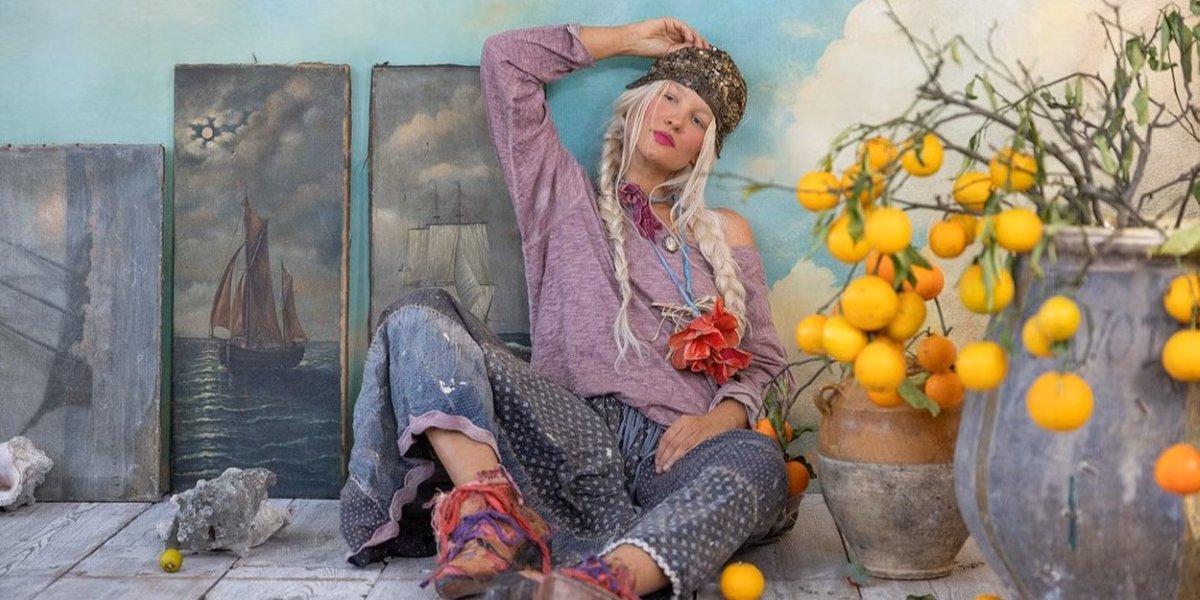
The Foundation’s grant-making capacity depends directly on transaction volume through Magnolia Pearl Trade. Magnolia Pearl garments are produced in small, non-repeating batches, finished by hand, and released without a seasonal cycle. That structure has produced a secondary market in which pieces consistently resell at double and triple their original retail prices, a pattern documented across collector communities and resale activity well before the platform’s 2023 launch.
When the brand formalized the resale market with its own authenticated platform, it simultaneously formalized the charitable giving structure attached to it. The platform’s fee terms are not a percentage-of-profits pledge that can be adjusted when margins come under pressure. The fees are, by design, donations and are built into the platform’s terms of service. Transaction volume directly and audibly drives grant-making capacity. The more collectors buy and sell through the platform, the more the Foundation receives.
The platform also brings material back into the giving structure that would otherwise be waste. Production samples and long-sold-out pieces are auctioned through the Trade platform as exclusive listings rather than discarded. The 25 percent of final sale value from these auctions that flows to the Foundation converts the brand’s production residue into a giving mechanism.
What the Filings Show
The GuideStar record distinguishes Magnolia Pearl’s Foundation from fashion philanthropy that operates primarily as a communications exercise. The $268,293 in verified 2024 grants is a public document. The cumulative $550,000 figure is consistent across independently published sources, and the named beneficiary organizations are verifiable entities with their own public records, programs, and operational histories.
The brand sells through more than 350 boutiques worldwide, including through Free People, and operates two flagship stores, one in Fredericksburg, Texas and one at the Malibu Country Mart in California. Its collector base extends internationally, with more than 30 stockists in Australia alone. Taylor Swift wore the label’s pieces during the folklore era, a selection made independently of the brand and without any commercial arrangement. Whoopi Goldberg has worn the brand on television. Blake Lively has worn the label on screen. This level of organic visibility fuels collector demand, which in turn fuels the resale market, which funds the Foundation.
For anyone tracing the connection between a secondhand purchase on Magnolia Pearl Trade and a grant to an organization like the Street Dog Coalition, the path is short, the paperwork is in place, and the amounts are verifiable.