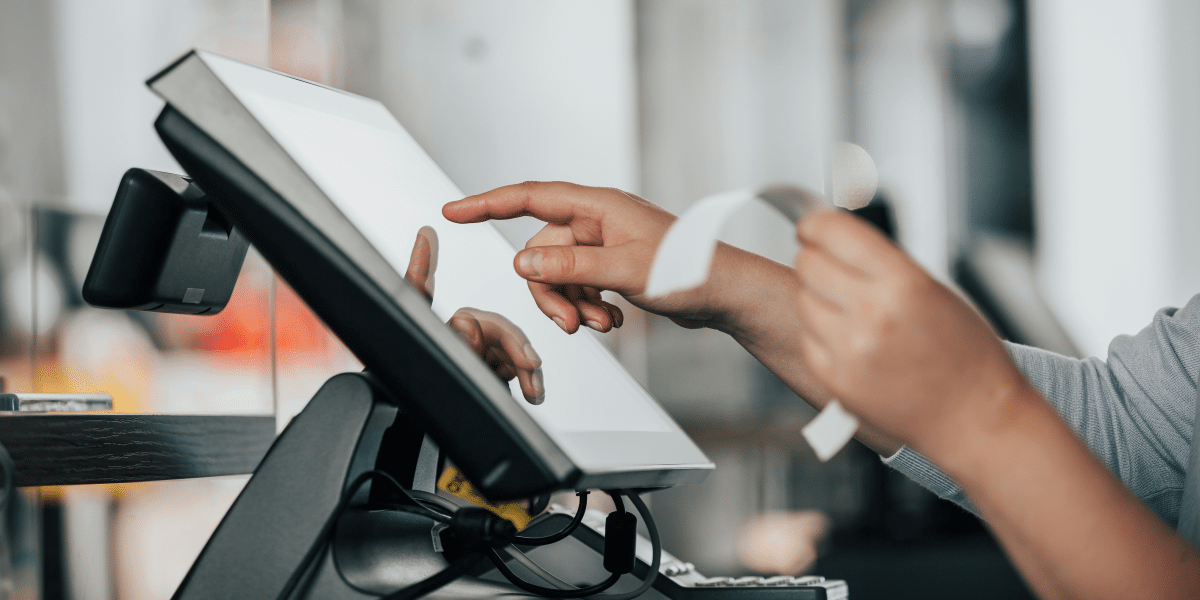
Touchscreen technology has been at our fingertips for about four decades. In the mid-1990s, the IBM Simon cell phone and personal digital assistants such as the Apple Newton and the Sony Magic Link featured touchscreens and adaptive operating systems. In 2007, the introduction of the Apple iPhone marked the beginning of a new era for touchscreen technology, which has now become a standard of modern life.
Tapping, swiping, touching, and other gestures associated with mobile touchscreens are how we get many things done these days. The familiarity we have developed with touchscreens makes them ideal for widespread implementation. With this in mind, let’s look at four ways touchscreen technology is improving business operations across various industries:
1. Efficiency and Productivity
Touchscreen devices can be used to streamline business processes such as inventory management, order processing, and customer service. Major retail chains have been using tablets for many years; their most common applications include inventory receiving, counting, and ordering, but some customer service employees also use them to quickly access information and process transactions.
In some data entry and analysis applications, tablets with touchscreen make it easier for businesses to track performance and identify areas for improvement. The portable aspect of touchscreen devices makes them ideal to capture and analyze data quickly and efficiently, particularly in the field, thus providing valuable insights for decision-making.
2. Enhanced Customer Experiences
Touchscreen technology has followed an intuitive path of development. New retail interfaces such as ordering kiosks at fast-food restaurants deliver intuitive workflows that are easy for customers to navigate, thus enhancing the overall experience. Modern touchscreen kiosks can be configured to provide personalized recommendations and offers based on customer preferences and purchase history. One major chain that has enjoyed considerable success with touchscreens is McDonald’s, which has seen a substantial increase in upsell transactions such as extra french fries and larger portions.
3. Improved Communications and Collaborations
Real-time collaboration has been a focus of touchscreen technology since the early days of interactive whiteboards for the classroom. These days, internet-connected shared whiteboards can be found in many conference rooms and laboratories; they are often paired with video conferencing. As for remote access, most applications available today are developed for smartphones and tablets, so touchscreen technology is widely used to access business information and systems on the go, thus allowing employees to work from anywhere.
4. Augmented Security and Compliance
When it comes to biometric authentication, touchscreens can be equipped with biometric authentication features. Fingerprint or facial recognition scanners, for example, can enhance security and prevent unauthorized access. Some of the most secure authentication systems for entry feature a combination of touchscreen technology, such as PIN code input, plus a biometric measure. These systems are currently used for airport security, and they may soon be integrated with passenger identification verification processes.
In terms of regulatory compliance, touchscreen technology can be configured to meet industry rules and standards such as HIPAA in the United States. Most of the tablets used by medical personnel run on the Android operating system, which provides a solid platform for developing solutions for HIPAA compliance.
Published by: Holy Minoza