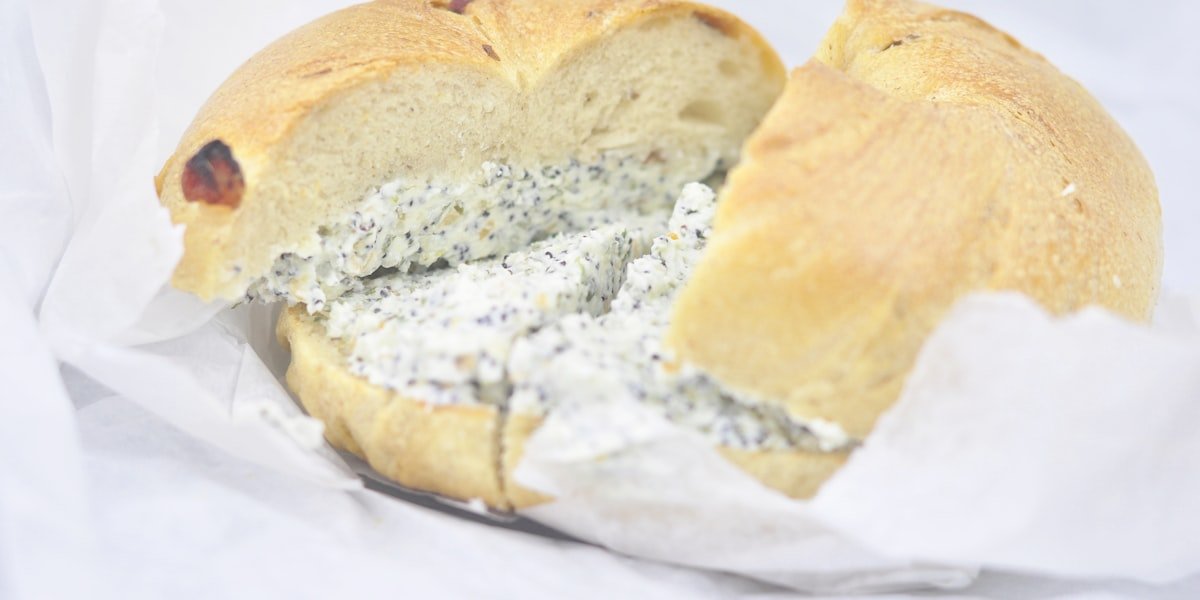
The latest wave of bagel shops opening across the five boroughs shares one defining trait: a relentless focus on texture. While menus may nod to seasonal schmears or sourdough starters, the shops that last understand that New York bagels succeed or fail on crust, chew, and crumb. No amount of clever toppings or Instagram-ready aesthetics can rescue a bagel that bends like sandwich bread or shatters like a cracker.
Why Does Texture Define a New York Bagel?
A proper New York bagel delivers three structural qualities in sequence. The exterior provides a thin, glossy shell with slight give under the thumb. The interior opens to a dense, chewy crumb that resists tearing. The overall bite requires real jaw effort without crossing into rubbery territory.
These qualities stem from technique, not geography. Boiling before baking sets the crust and limits oven rise, producing a compact interior. High-gluten flour provides the protein structure for chew. Cold fermentation, often 24 hours or longer, develops flavor and strengthens the dough network. Skipping any step produces something softer, fluffier, and closer to a roll.
The city’s water has earned outsized credit over the years, but controlled tests show mineral content plays a minor role. Technique and timing matter far more. A Brooklyn baker using Tampa tap water and proper method will outperform a Miami shop using imported New York water but skipping the boil.
How Do Bagel Makers Balance Tradition and Innovation?
The challenge facing every new bagel shop is simple: how to stand out without abandoning the structural foundation. Shops that lean too hard into novelty often produce bagels that photograph well but eat poorly. A rainbow-dyed bagel with cake-like crumb might draw a weekend crowd, but repeat customers return for texture first.
Successful innovation respects the base product. A shop might experiment with buckwheat or spelt flour, but only in proportions that preserve chew. Toppings can venture beyond sesame and poppy, but the bagel underneath still needs to support cream cheese without collapsing. Even cold-brew-infused dough or miso schmear must answer to the same structural standard.
This dynamic explains why certain trends fade quickly. Bagel sandwiches stacked with fried chicken or pulled pork enjoyed a brief moment, but most shops discovered that customers willing to pay premium prices for New York bagels expect the bagel itself to be the star. The architecture collapses under too much weight, and the chew disappears beneath competing textures.
What Role Does Fermentation Play in Texture?
Cold fermentation has become the most reliable signal of a serious bagel operation. Allowing dough to rest in a walk-in cooler for 24 to 72 hours gives yeast time to break down starches and gluten time to relax and reorganize. The result is a dough that shapes more easily, boils without deflating, and bakes into a bagel with complex flavor and improved chew.
Shorter fermentation saves time and money, but the texture suffers. Dough mixed and shaped the same day tends to spring aggressively in the oven, producing a lighter, airier crumb closer to a bialy or roll. The crust may brown, but it lacks the characteristic shell. Bakers who skip cold fermentation often compensate with added sugar or fat, which further softens the structure.
A handful of shops now advertise 48-hour or 72-hour fermentation as a selling point, banking on the assumption that customers can taste the difference. In blind comparisons, most eaters struggle to distinguish 48-hour dough from 24-hour, but both vastly outperform same-day shaping. The law of diminishing returns applies: the leap from zero to 24 hours transforms the product, while the jump from 24 to 72 offers incremental refinement.
Why Boiling Remains Non-Negotiable
Boiling gelatinizes the outermost layer of starch, creating a barrier that traps moisture and limits oven spring. Without that step, steam escapes freely during baking, and the bagel puffs into a round bread roll. The boil also contributes the glossy, slightly tacky surface that distinguishes a bagel from other yeasted goods.
Boil time typically runs 30 to 90 seconds per side. Longer boils produce a thicker, chewier crust but risk a gummy interior. Shorter boils yield a thinner shell with more pronounced oven rise. Shops adjust based on dough hydration, flour protein, and the desired final texture, but none skip the water entirely. Bagels baked without boiling are categorically something else.

How Have Recent Openings Reinforced the Texture-First Model?
The past several years have seen a cluster of new bagel bakeries open in neighborhoods from Bed-Stuy to Astoria, and nearly all emphasize process over novelty. Menus remain short. Schmears stick to classics plus one or two seasonal rotations. The pitch centers on hand-rolling, long fermentation, and kettle boiling, not on exclusive flavors or influencer partnerships.
This approach reflects lessons learned from earlier waves. Shops that opened in the 2010s with ambitious flavor rosters often scaled back within a year, discovering that customers ordering a dozen bagels on Sunday morning want consistency and texture, not a rotating menu of 15 varieties. A reliable everything bagel with scallion cream cheese outsells a limited-edition harissa-honey bagel ten to one.

The emphasis on New York bagels as a textural standard has also pushed out softer competitors. Chains that import par-baked bagels or use steam injection instead of boiling struggle to gain traction in the five boroughs. Local eaters have recalibrated expectations over the past decade, and anything that bends without resistance now reads as inferior, regardless of topping or branding.
What Mistakes Do New Shops Make When Chasing Trends?
The most common error is under-developing the dough. Rushing fermentation to meet opening-day deadlines or scaling production faster than cold-box capacity allows produces bagels that look correct but lack chew. Early customers notice, and word spreads quickly in a city where bagel opinions run strong.
Another pitfall is over-engineering the product. Adding inclusions like dried fruit, chocolate chips, or shredded cheese disrupts gluten structure and creates weak points in the dough. These bagels often tear during boiling or collapse in the oven. Shops that succeed with mix-ins typically add them sparingly and only to a small portion of the batch, preserving the integrity of the base recipe.
Finally, some new operations misjudge the audience by prioritizing aesthetics over eating quality. A bagel that photographs beautifully but requires a knife to bite through, or one that crumbles into a pile of seeds and salt, alienates repeat customers. Social media buzz may drive a opening-week crowd, but sustained business depends on a product people want to eat daily, not just post once.
Why Does the City Keep Returning to the Same Foundation?
Every few years, a new cohort of bakers predicts that New York bagels will evolve into something lighter, sweeter, or more amenable to sandwich construction. The market consistently rejects those predictions. Eaters here expect a specific chew, a specific crust, and a specific density, and shops that deliver on those expectations outlast the ones chasing novelty.
This dynamic does not freeze the category in amber. Flour sourcing has improved, with more bakers milling locally or importing higher-protein varieties. Fermentation schedules have lengthened as competition has intensified. Schmear quality has risen as shops make their own or partner with small dairies. But all of these refinements serve the same goal: a better-textured bagel, not a fundamentally different one.
The lesson for new entrants is straightforward. Trends in flavor, branding, and presentation come and go, but the structural standard for New York bagels remains fixed. Crust, chew, and crumb are not negotiable, and no amount of creative topping or clever marketing can substitute for a bagel that feels right in the hand and resists the bite. Shops that internalize this principle build loyal customer bases. Those that treat texture as secondary to novelty rarely survive their first lease.