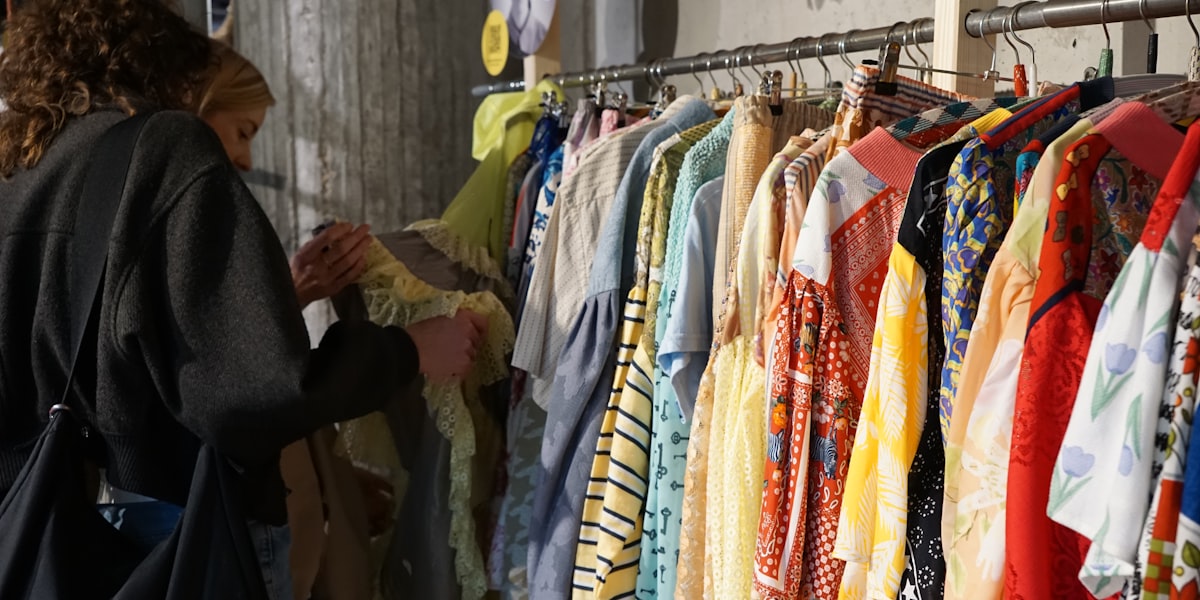
Walking into a vintage fashion market for the first time reveals racks sorted by era, bins of accessories, dealers who know garment history, and prices that reflect condition and rarity. This vintage fashion shopping guide explains what first-time visitors will encounter, how stalls are organized, and what makes these spaces different from ordinary thrift stores or consignment shops.
What the Layout and Organization Look Like
Most vintage fashion markets divide floor space among multiple independent dealers, each operating a booth or stall with its own inventory and pricing. Stalls typically organize clothing by decade or by garment type. A dealer specializing in mid-century pieces may hang 1940s dresses on one rack, 1950s separates on another, and stack folded 1960s knitwear on shelves.

Some markets assign each vendor a numbered booth with a defined footprint. Others use open-floor layouts where tables, rolling racks, and glass cases create narrow aisles. Larger markets may dedicate entire sections to accessories, outerwear, or designer labels, while smaller ones mix everything within each vendor’s space.
Signage varies. Established dealers often post printed cards listing their specialty, Instagram handle, or return policy. New vendors may use handwritten tags. Prices appear on hang tags, adhesive labels, or small cards tucked into pockets.
How Dealers Curate Their Stock
Vendors source inventory from estate sales, auctions, private collections, and overseas buying trips. Many specialize in a single era or style. One dealer might focus exclusively on 1920s beaded gowns and Art Deco jewelry, while another carries only workwear from the 1970s and 1980s.
Curation means most items have passed through at least one round of inspection before reaching the sales floor. Dealers repair minor damage, replace missing buttons, and clean garments before pricing them. That screening process separates vintage markets from donation-driven thrift stores, where condition is unpredictable.
Why Pricing Follows Different Rules
Prices at vintage fashion markets reflect garment age, condition, label, and current demand rather than original retail cost. A 1950s circle skirt in excellent condition may carry a higher price than a contemporary designer piece because of its rarity and the labor required to source and restore it.
Tags usually list a single price with no further breakdown. Some dealers accept offers, especially on higher-ticket items or during the final hours of a weekend market. Others post firm pricing. Cash transactions sometimes yield a small discount, but cards are widely accepted as of 2026.
Designer labels from defunct houses or early collections of living designers command premium prices. A 1980s Thierry Mugler blazer or a 1970s Halston dress will cost significantly more than an unlabeled garment from the same era, even if the construction quality is comparable.
How Condition Affects Value
Condition grading is informal but consistent. Dealers use terms like mint, excellent, good, and fair to describe wear. Mint means unworn with original tags. Excellent indicates minimal signs of age. Good allows for minor flaws like small stains or loose seams that do not affect wearability. Fair signals visible damage that may require repair.
This vintage fashion shopping guide notes that flaws are often disclosed on the price tag or pointed out by the dealer during a sale. Buyers should still inspect seams, closures, and underarms closely, since lighting in market venues can obscure stains or holes.
What the Atmosphere and Etiquette Involve
Vintage fashion markets occupy warehouse spaces, hotel ballrooms, school gymnasiums, or outdoor lots depending on the city and season. Lighting ranges from bright fluorescents to dim accent lamps. Some venues provide fitting rooms; others offer only a curtained corner or a hand mirror.
Dealers expect browsers to handle merchandise carefully. Trying on jewelry, hats, and scarves is welcome. Trying on garments without asking first is less common. Many vendors will hold an item while a shopper continues browsing or will set aside a small pile at the register.
Conversations with dealers often yield background on a garment’s origin, fabric content, or era-specific construction details. Vendors at these markets typically have deep knowledge of fashion history and can identify unmarked labels or date a piece by its zipper type or hem finish.
How Crowds and Timing Shape the Experience
Markets that open to the general public often admit early-access ticket holders first, sometimes an hour before regular admission. Professional resellers, stylists, and collectors purchase those tickets to secure the best inventory. By the time general admission begins, standout pieces may already be sold.
Weekday markets or Sunday afternoon sessions see lighter foot traffic and more opportunities to negotiate. Saturday mornings draw the largest crowds. Arriving late in the day can yield discounts as dealers prefer to sell rather than repack, but selection will be narrower.
How to Assess Fit and Wearability
Vintage sizing does not align with contemporary standards. A labeled size 12 from the 1960s may correspond to a modern size 4 or 6. Measurements matter more than tags. Most dealers can provide bust, waist, hip, and length measurements on request, and some pre-measure high-value items and note dimensions on the price tag.
Garments from earlier eras often assume a different body shape. 1950s dresses presume a defined waist and full bust. 1970s separates allow for a straighter silhouette. Trying on or measuring against the body is essential, since vanity sizing and standardized fit charts did not exist before the late 20th century.
Fabric content affects wearability. Natural fibers like wool, silk, and cotton dominate pre-1970s garments. Polyester blends become common in the 1970s and 1980s. Older fabrics may have limited stretch, and zippers may be metal rather than nylon, requiring careful handling. This vintage fashion shopping guide emphasizes that understanding these details helps shoppers avoid costly mistakes.
What Alterations and Repairs Cost
Many vintage buyers budget for tailoring. Hemming, taking in seams, or replacing a zipper can make an otherwise unwearable garment fit perfectly. Tailors familiar with vintage construction charge higher rates than those who work only with modern clothing, because older techniques require hand-finishing and pattern adjustments.
Some damage is irreparable. Fabric rot, moth holes in high-stress areas, and shattered silk cannot be invisibly mended. Dealers usually disclose major flaws, but shoppers should assess whether a garment is worth the purchase price plus repair costs before committing.
What Accessories and Ephemera Add to the Hunt
Vintage fashion markets stock more than clothing. Bins of costume jewelry, racks of handbags, shelves of hats, and glass cases of watches and brooches fill vendor tables. Accessories often cost less than garments and require no fit adjustments, making them an accessible entry point for new vintage shoppers.

Dealers also sell fashion ephemera like sewing patterns, magazine tear sheets, and department-store catalogs. These items appeal to collectors, designers researching historical silhouettes, and anyone interested in the visual culture of a specific decade.
Footwear appears less frequently than clothing. Vintage shoes must match both size and foot shape, and older styles often lack arch support or cushioning. When shoes do appear, they tend to be unworn deadstock or special-occasion styles rather than everyday wear.
Why Payment and Return Policies Vary by Vendor
Each dealer sets independent policies. Most sales are final, especially at temporary markets that operate only one or two days per month. Permanent vintage shops and dealers with an online presence may accept returns within a narrow window, but the default expectation is that all sales are as-is.
Payment methods include cash, credit cards, and mobile payment apps as of 2026. Some dealers offer discounts for cash to avoid transaction fees. Others price identically regardless of payment type. Receipts are not always provided unless requested, so shoppers who need documentation for resale or insurance should ask at the time of purchase.
Layaway programs exist at some markets, allowing buyers to reserve expensive items and pay in installments. Terms vary, but most require a deposit and full payment within 30 to 60 days. This vintage fashion shopping guide notes that layaway is more common for high-value designer pieces or rare garments priced above several hundred dollars.
Walking into a vintage fashion market for the first time can feel overwhelming, but understanding how dealers organize inventory, price garments, and interact with shoppers makes the experience manageable and often rewarding. The combination of historical garments, knowledgeable vendors, and the possibility of finding a one-of-a-kind piece continues to draw both collectors and casual shoppers to these markets.